Call For estimate
Glass Railings
Black Aluminum Railings
Dark & Light Wood Railings
Aluminum Railings
Call (561)672-0717

Knee Wall Railings
Fascia Mount Railings
Indoor Stair & Surface Mount Railings
Outdoor Stair & Surface Mount Railings
Handrails
Standoff-Pins Glass Railing Systems
Glass Railing Post Systems
Salt air accelerates corrosion on any metal surface. Powder-coated railings add a protective barrier that extends the life of your installation significantly. The powder coating process creates a finish much thicker than traditional paint, and it bonds to the metal at a molecular level through a heat-curing process.
This protective layer does more than prevent rust. It also resists UV degradation, which can weaken materials over time. After a decade of exposure to South Florida sun and salt spray, a quality powder-coated system should show minimal deterioration. Standard colors include black, white, and bronze, though custom colors are available for matching architectural elements.

Choosing Hurricane-Resistant Railings: What South Florida Homeowners Need to Know
Living along the South Florida coast means accepting the reality of hurricane season. Every year, homeowners face the same questions about protecting their properties. While many focus on securing windows and roofs, railing systems often get overlooked until it's too late. These structural elements need to withstand sustained winds exceeding 140 mph, and the wrong choice can mean thousands in damage or serious safety risks.
South Florida building codes exist for good reason. The region's unique position makes it vulnerable to some of the strongest tropical systems in the Atlantic. Your balcony or deck railing isn't just an aesthetic feature. It's a critical safety component that must perform under extreme conditions.
Understanding Wind Load Requirements in Coastal Zones
Wind load ratings tell you how much force a railing can handle before failing. South Florida falls under High-Velocity Hurricane Zones (HVHZ), which require railings to meet specific engineering standards. Most residential installations need systems rated for wind speeds between 140-180 mph, depending on your exact location and building height.
The Florida Building Code mandates that all exterior railings must comply with HVHZ standards in Miami-Dade and Broward counties. These requirements extend to Monroe County and parts of Palm Beach County. Testing protocols measure both positive and negative pressure, simulating the push and pull forces that occur during a storm. Your railing needs to handle both directions without compromising structural integrity.

Aluminum Railings for Maximum Durability
Aluminum railing systems have become the standard for South Florida installations because of their strength-to-weight ratio. The material doesn't rust, which matters tremendously in salt air environments. Engineers design these systems with thicker wall profiles and reinforced posts that can handle lateral loads from sustained winds.
The structural advantage comes from how aluminum flexes under pressure without breaking. During a hurricane, rigid materials can snap, but properly engineered aluminum systems bend slightly and return to position. Posts are typically anchored with through-bolts rather than surface mounts, distributing force across a wider area of the mounting surface.
Impact-Resistant Glass Systems
Tempered glass alone won't cut it for hurricane conditions. Glass railings in coastal areas require laminated panels that hold together even after impact. The lamination process bonds multiple glass layers with a polymer interlayer, similar to automotive windshields. When something strikes the panel, it may crack but won't shatter into dangerous projectiles.
Wind-borne debris poses one of the biggest threats during storms. A laminated glass panel rated for hurricane conditions can withstand the impact of a two-by-four traveling at 50 mph. The glass thickness typically ranges from 1/2 inch to 3/4 inch for residential applications, with the exact specification depending on panel size and mounting method.
Surface Protection and Coastal Durability
Material Choices for Hurricane Resistance
Installation and Anchoring Standards
How your railing attaches to the structure matters as much as the materials themselves. Handrail installation in hurricane zones requires specific anchoring techniques that differ from standard applications. Through-bolting directly to structural members provides the strongest connection. Surface-mounted systems using concrete anchors need proper embedment depth and spacing.
Building inspectors will verify that posts are spaced correctly and that fasteners meet code requirements. Typical post spacing runs 4 to 6 feet for aluminum systems, though high-wind applications often require closer spacing. The mounting substrate also affects installation methods. Concrete requires different hardware than wood framing, and both need to account for expected loads.
Modern Railing Co. offers several models engineered specifically for high wind load balcony railings in coastal environments. Each system has been tested to meet or exceed Florida Building Code requirements for HVHZ applications.
Heavy-Gauge Aluminum Systems
These railings feature reinforced posts with thick wall construction and industrial-grade top and bottom rails. Wind ratings typically reach 180 mph for residential applications. Options include vertical picket designs and horizontal cable configurations, both providing strength without blocking views.
Laminated Glass Installations
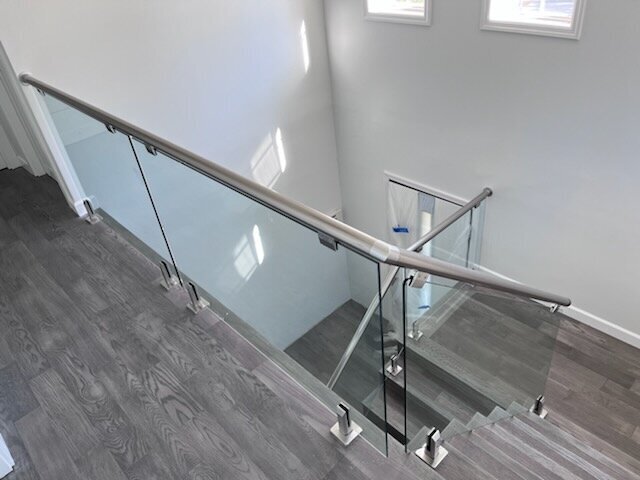
Frameless and semi-frameless glass systems use impact-resistant laminated panels ranging from 1/2 inch to 3/4 inch thickness. Mounting hardware is engineered for both concrete and wood substrates. These installations meet Miami-Dade NOA requirements and provide unobstructed sightlines while maintaining full hurricane protection.
Combined Material Configurations
Aluminum frame systems with glass panel inserts offer design flexibility for multi-level properties. The powder-coated aluminum provides structural support while impact-resistant glass fills the panels. This approach works particularly well for condominiums and waterfront homes requiring both durability and aesthetics.
Railing Models Built for South Florida Conditions
Getting the Installation Right
Even the best materials won't help if installation is sloppy. Anchoring depth, post spacing, and fastener selection all affect how your railing performs during a storm. Contractors familiar with coastal building codes know these details matter.
Location influences installation requirements more than most homeowners realize. A beachfront property faces different wind loads than a home three blocks inland. Upper floors need stronger anchoring than ground-level decks. These variables determine spacing between posts and what type of mounting hardware gets used.
South Florida municipalities typically require permits and inspections for railing installations. The paperwork takes time, but it confirms everything meets code. Save your wind load certifications and inspection reports with other important property documents.

We provide free estimates and service South Florida - Palm Beach County, Broward County and Miami-Dade County. All of our material is available & in stock making, turnaround time currently at 2-3 weeks (subject to change) for installations and for shipping orders within 5 business days in US & abroad.
Modern Railing Co has top quality material, industry experience, dedication to service, make us different than others. We will deliver your expectations!
Modern Railing Co's aluminum railing & glass railing systems are available in various styles to complement residential and commercial settings. Main features include:
* Strong and durable construction (weatherproof)
*3/8 & 1/2 inch Tempered Glass
*9/16, 11/16 and 13/16 Laminated Tempered Glass
* Extremely long service life
* Unique finish (anodizing) which fulfills high quality standards (doesn't rust or corrode).
* High resistance to UV radiation (doesn't flake or crack)
* Flexible designs
* Easy maintenance
* All items are in stock
Request a Quote
South Florida GLass & Aluminum Railings
Check out our reviews on Google
About US
(561)672-0717
info@modernrailingco.com
980 North Federal Highway Suite 110
Boca Raton, FL 33432
Shipping Available in the US & Installation in South FLorida.
Contact Us