Call For estimate
Glass Railings
Black Aluminum Railings
Dark & Light Wood Railings
Aluminum Railings
Call (561)672-0717

Knee Wall Railings
Fascia Mount Railings
Indoor Stair & Surface Mount Railings
Outdoor Stair & Surface Mount Railings
Handrails
Standoff-Pins Glass Railing Systems
Glass Railing Post Systems
Aluminum railing installation is available throughout South Florida, including Palm Beach, Broward and Miami-Dade counties.
Projects include balconies, decks, stairs, porches, pool areas and commercial properties. The installation is planned around the structure, exposure, mounting method and any building or association requirements.
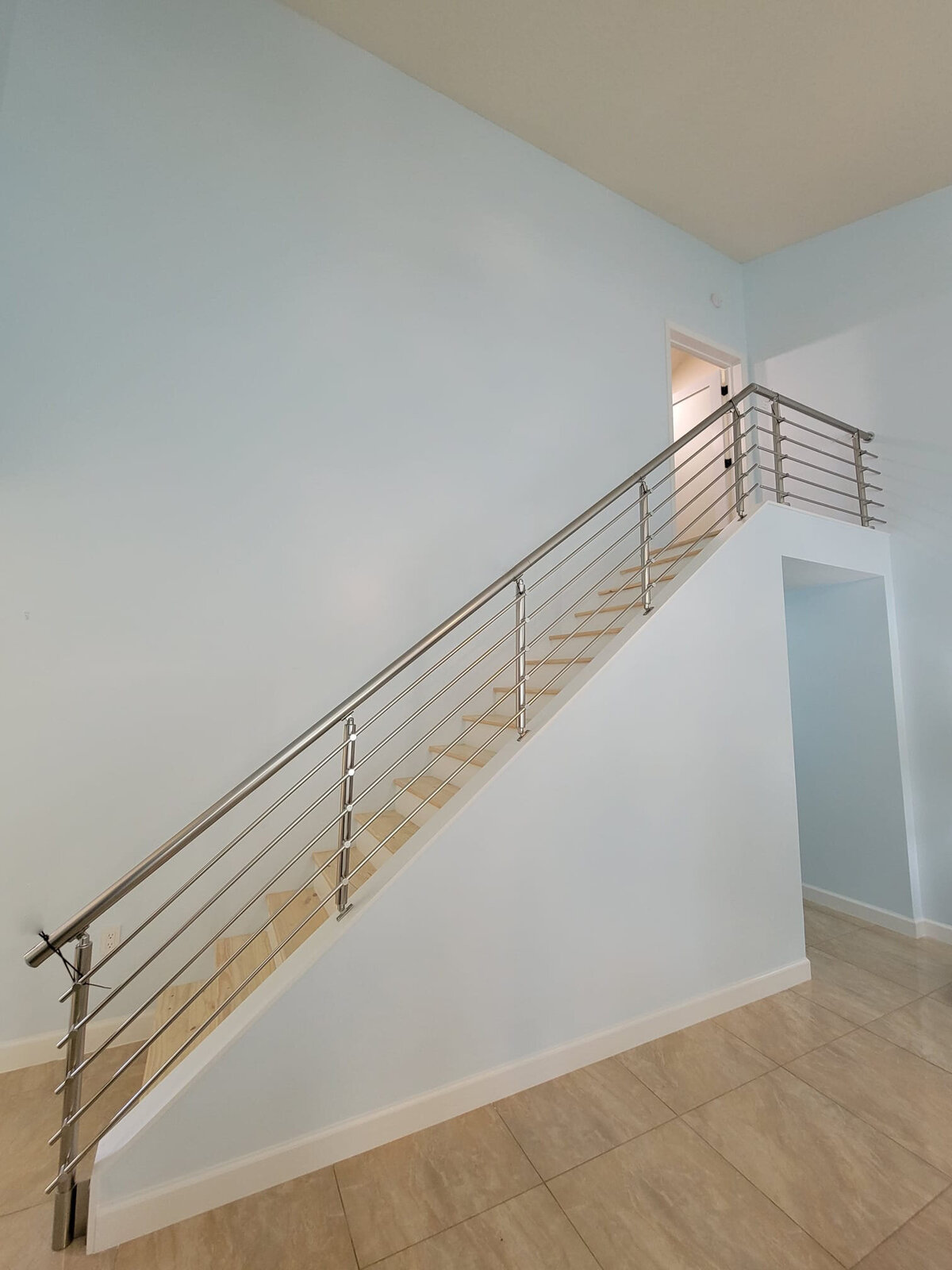
Aluminum railings work well for balconies, decks, stairs, porches, pool areas and commercial properties. They resist corrosion, require less maintenance than wood or painted steel and can be fabricated in a wide range of profiles and finishes.
The right system depends on where the railing will be installed, how it will attach to the structure and how much exposure it receives from sun, rain and salt air. Options include vertical pickets, horizontal profiles, glass infill and wall-mounted handrails.
Aluminum Railing Installation in South Florida
Aluminum Railing Options Available in South Florida
Where Aluminum Railings Work Well
Aluminum can be used indoors or outdoors, although it is most often selected for areas exposed to South
Florida weather.Common applications include:
Florida weather.Common applications include:
- Second-floor balconies
- Exterior and interior stairs
- Decks and raised patios
- Porches and entry steps
- Pool enclosures
- Rooftop terraces
- Exterior corridors
- Parking structures
- Condo and hotel common areas
Aluminum Railing Styles and Finishes
Black Aluminum Railings
Black works well with white stucco, stone, concrete, wood and dark window frames. It can be used with vertical pickets, horizontal profiles or glass panels.
Matte and satin black aluminum railings are available for balconies, stairs, decks and pool areas. Scratches should be touched up before moisture reaches the aluminum beneath the finish.
Wood-Look Aluminum Railings
Wood-look finishes add warmth without the swelling, splitting and refinishing associated with natural wood.
Both light and dark wood-look aluminum can be used on decks, balconies and interior stairs where black or bare metal would feel too stark.
The wood pattern is applied as a finish rather than a veneer, so it does not peel or absorb moisture like real wood.
Round and Square Profiles
Round profiles have a softer, more traditional appearance. Square profiles create cleaner lines and work well with contemporary homes and commercial buildings.
Both can be used with pickets, horizontal infill or glass panels. The best profile depends on the surrounding architecture and whether the top rail also needs to provide a comfortable grip.


Powder-Coated and Anodized Aluminum
The finish protects the railing and determines its color, texture and appearance.
Powder Coating
Powder coating applies a dry finish that is baked onto the aluminum. It is available in a broad range of colors and can be used on black, bronze and wood-look systems.
The available powder-coated finishes include matte, satin and textured options. Damaged areas should be repaired early so salt and moisture do not collect beneath the coating.
Anodized Aluminum
Anodizing strengthens the natural oxide layer of the aluminum rather than adding a separate coating on top.
It cannot chip or peel in the same way as powder coating, but the color range is more limited. Clear, bronze and dark bronze are the most common options.
Anodized aluminum may be useful on highly exposed properties where minimizing finish repairs is a priority.

Welded Railings
Welded railings are fabricated from field measurements. Corners and transitions can be built with fewer visible seams, making this method useful for angled stairs, curved runs and custom layouts.
Welded systems generally require more fabrication time and are finished after the sections are assembled.
Prefabricated and Mechanical Systems
Prefabricated systems use standard sections joined with concealed or low-profile hardware.
They install faster and may be more economical for straight runs and properties with several repeating sections.
They are often used for multifamily and commercial projects where damaged sections may need to be replaced individually later.

Welded and Prefabricated Aluminum Railings
Aluminum Balcony Railings
Aluminum is a practical balcony material because it allows airflow, handles exterior exposure and usually needs less cleaning than glass.
Vertical pickets provide a familiar appearance, while horizontal profiles create a more modern edge. Aluminum frames can also hold glass panels when the view needs to remain more open.
The mounting method, wind exposure, balcony height and concrete condition all need to be reviewed when planning balcony railings.
Surface and Fascia Mounting
Surface-mounted posts use base plates anchored through the top of the concrete, wood or structural deck surface. This is the most common method for stairs, landings and many residential decks.
Fascia-mounted posts attach to the vertical edge instead. Fascia mounting keeps the full deck or balcony width open and reduces visible hardware on the walking surface.
The vertical edge must be strong enough to hold the anchors. Concrete condition, slab depth and access to the outside face need to be checked before this method is selected.
Do Aluminum Railings Rust?
Aluminum does not rust because it does not contain iron. It can still corrode when salt, moisture or incompatible metals in South Florida affect the surface.
Coastal corrosion may appear as:
Finish quality and hardware selection matter as much as the aluminum itself. Stainless fasteners, isolation washers and correctly prepared coatings can reduce problems around connections.
Regular rinsing and early repairs are important parts of coastal corrosion protection.
Coastal corrosion may appear as:
- Pitting
- Chalky residue
- Discoloration near fasteners
- Bubbling beneath a damaged coating
- Wear around anchors and joints
Regular rinsing and early repairs are important parts of coastal corrosion protection.

Commercial and multifamily properties in South Florida need repeatable sections, durable finishes and components that can be repaired or replaced without removing the entire system.
Common applications include:
Larger commercial railing projects may also involve engineering, permit documents, phased scheduling and coordination with residents, tenants or building management.
Common applications include:
- Exterior stairs
- Walkways and corridors
- Rooftop terraces
- Parking structures
- Pool decks
- Condo common areas
- Hotel and mixed-use properties
Aluminum Railings for Commercial Properties in South Florida

Frequently Ask Questions
Deck railings need to work with the deck material, edge structure and available walking space.
Surface-mounted posts sit on top of the deck. Side-mounted posts attach to the outer edge and keep more of the floor open.
Aluminum deck railings can be installed with pickets, horizontal infill or glass panels depending on the view, airflow and style of the property.
Aluminum works well for exterior stairs because it is lightweight, corrosion resistant and easy to fabricate around landings and changes in direction.
For concrete steps, posts may be surface mounted with base plates or set into core-drilled openings. The best method depends on the concrete depth, exposure and condition around the proposed anchors.
Wall-mounted aluminum handrails can also be installed where a full guardrail is not needed. The rail profile, height and clearance should be confirmed before fabrication.
Aluminum Railings for Stairs and Concrete Steps
Aluminum Deck Railings
Initial Review
Send photos, rough measurements and details about where the railing will be installed. Include the preferred style and whether the project is indoors or outdoors.
Site Measurements
The railing run, corners, stairs and mounting surfaces are measured. Existing concrete, wood framing and anchor conditions are also reviewed.
Profile and Finish Selection
The profile, infill, finish and mounting method are selected. Gates, glass panels and custom transitions should be identified at this stage.
Fabrication
The railing is fabricated from the confirmed measurements or prepared from stocked components.
Installation
The mounting surfaces are prepared, posts are anchored and the railing sections are aligned and secured. Most residential installations take one to three days on site once the materials are ready.
Send photos, rough measurements and details about where the railing will be installed. Include the preferred style and whether the project is indoors or outdoors.
Site Measurements
The railing run, corners, stairs and mounting surfaces are measured. Existing concrete, wood framing and anchor conditions are also reviewed.
Profile and Finish Selection
The profile, infill, finish and mounting method are selected. Gates, glass panels and custom transitions should be identified at this stage.
Fabrication
The railing is fabricated from the confirmed measurements or prepared from stocked components.
Installation
The mounting surfaces are prepared, posts are anchored and the railing sections are aligned and secured. Most residential installations take one to three days on site once the materials are ready.
Aluminum Railing Installation Process
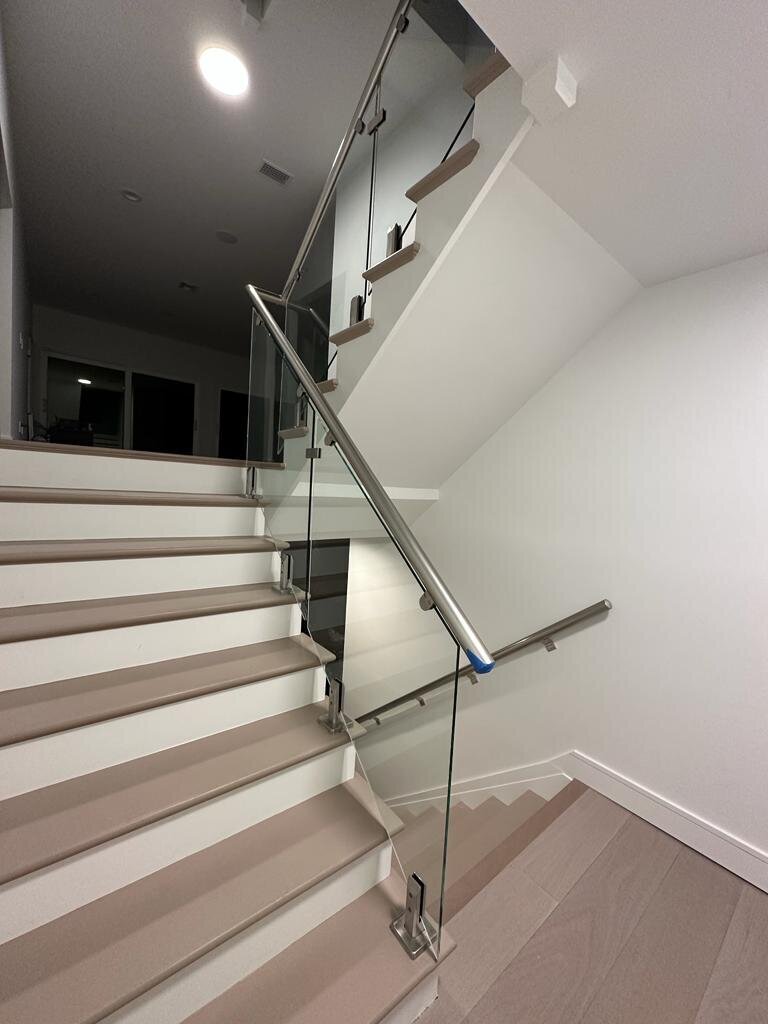
The main cost factors in South Florida include:
A straight prefabricated picket railing is usually more economical than a welded system with glass, several corners, and custom finishes.
Upper-level and commercial projects may also require additional material handling, staging, and restricted installation hours.
- Total linear footage
- Vertical or horizontal profile
- Glass infill
- Number of stairs, corners and returns
- Gates and hardware
- Welded or prefabricated construction
- Powder-coated or anodized finish
- Surface or fascia mounting
- Existing railing removal
- Concrete or anchor repairs
- Engineering and permits
- Property access
Upper-level and commercial projects may also require additional material handling, staging, and restricted installation hours.
What Affects Aluminum Railing Cost in South Florida?
Aluminum requires relatively little maintenance, but outdoor railings should still be cleaned and inspected.
Rinse the railing with fresh water to remove salt, dust, and other residue. Mild soap and a soft cloth are usually enough for heavier buildup.
Avoid aggressive pressure washing around coatings, joints, and glass gaskets. Strong spray can damage the finish or force water into connections.
Check the railing periodically for:
Repairing small coating defects early can prevent more visible damage later.
Rinse the railing with fresh water to remove salt, dust, and other residue. Mild soap and a soft cloth are usually enough for heavier buildup.
Avoid aggressive pressure washing around coatings, joints, and glass gaskets. Strong spray can damage the finish or force water into connections.
Check the railing periodically for:
- Loose fasteners
- Movement around posts
- Scratches or chips
- Corrosion around hardware
- Cracks in the mounting surface
- Damaged glass or gaskets

South Florida Cleaning and Maintenance
Areas We Serve in South Florida
Send:
- Photos of the full railing area
- Close photos of the mounting surface
- Approximate linear footage
- The application, such as a balcony, deck or stair
- Your preferred profile and finish
- Details about any existing railing
- The property location
- Any plans, HOA rules or permit information

What to Send for an Aluminum Railing Estimate
Send photos, approximate measurements, your preferred finish and details about where the railing will be installed. The mounting surface, layout and exposure can then be reviewed before the system is finalized.
Call 561-672-0717 or send us a message to discuss your aluminum railing installation.
Request an Aluminum Railing Quote in South Florida
Modern Railing Co is a leader in glass & aluminum railing systems for indoor & outdoor stair, balcony, porch & deck railings. We offer several designs and color options for interior & exterior railings to style your home or commercial space. Including Aluminum, Black, Light Wood & Dark Wood.
We provide free estimates and service South Florida - Palm Beach County, Broward County and Miami-Dade County. All of our material is available & in stock making, turnaround time currently at 2-3 weeks (subject to change) for installations and for shipping orders within 5 business days in US & abroad.
Modern Railing Co has top quality material, industry experience, dedication to service, make us different than others. We will deliver your expectations!
Modern Railing Co's aluminum railing & glass railing systems are available in various styles to complement residential and commercial settings. Main features include:
* Strong and durable construction (weatherproof)
*3/8 & 1/2 inch Tempered Glass
*9/16, 11/16 and 13/16 Laminated Tempered Glass
* Extremely long service life
* Unique finish (anodizing) which fulfills high quality standards (doesn't rust or corrode).
* High resistance to UV radiation (doesn't flake or crack)
* Flexible designs
* Easy maintenance
* All items are in stock
We provide free estimates and service South Florida - Palm Beach County, Broward County and Miami-Dade County. All of our material is available & in stock making, turnaround time currently at 2-3 weeks (subject to change) for installations and for shipping orders within 5 business days in US & abroad.
Modern Railing Co has top quality material, industry experience, dedication to service, make us different than others. We will deliver your expectations!
Modern Railing Co's aluminum railing & glass railing systems are available in various styles to complement residential and commercial settings. Main features include:
* Strong and durable construction (weatherproof)
*3/8 & 1/2 inch Tempered Glass
*9/16, 11/16 and 13/16 Laminated Tempered Glass
* Extremely long service life
* Unique finish (anodizing) which fulfills high quality standards (doesn't rust or corrode).
* High resistance to UV radiation (doesn't flake or crack)
* Flexible designs
* Easy maintenance
* All items are in stock
Request a Quote
South Florida GLass & Aluminum Railings
Check out our reviews on Google
About US
(561)672-0717
info@modernrailingco.com
980 North Federal Highway Suite 110
Boca Raton, FL 33432
Shipping Available in the US & Installation in South FLorida.
Contact Us