Call For estimate
Glass Railings
Black Aluminum Railings
Dark & Light Wood Railings
Aluminum Railings
Call (561)672-0717

Knee Wall Railings
Fascia Mount Railings
Indoor Stair & Surface Mount Railings
Outdoor Stair & Surface Mount Railings
Handrails
Standoff-Pins Glass Railing Systems
Glass Railing Post Systems

Florida Outdoor Stair Railing Requirements: What Homeowners Need to Know
Planning to build or upgrade outdoor stairs? You'll need to follow specific safety codes. These outdoor stair railing requirements exist to prevent falls and injuries—especially in a climate where rain, humidity, and sun exposure create real hazards.
The Florida Building Code (FBC) sets the standards. While you want something that looks good, compliance comes first.
When You Need a Railing
The code is clear: any stairway with four or more risers needs a railing system. Same goes if your total rise exceeds 30 inches.
The Florida building code for exterior stairs also requires treads at least 10 inches deep and risers no taller than 7.75 inches. In this climate, stick with aluminum, stainless steel, or treated wood that won't corrode from salt air and humidity.
The handrail is what you grip while using the stairs. Florida building code handrail requirements are specific: your handrail must sit between 34 and 38 inches above the stair nosing (the front edge of each step).
Circular handrails should be 1.25 to 2 inches in diameter. Non-circular profiles can't exceed 6.25 inches in perimeter. You need at least 1.5 inches of space between the handrail and any wall.
Key measurement: Measure from the stair nosing, not the tread surface. Keep it consistent along the entire flight. Handrails should extend at least 12 inches beyond the top riser and one tread depth past the bottom riser.
Handrail Height and Shape Requirements
Guardrails prevent falls from open sides. Residential guardrails must be at least 36 inches tall. The critical rule: openings between balusters can't let a 4-inch sphere pass through. This prevents small children from slipping through.
Fascia-mount systems attach to the outer band of a deck. Knee wall installations secure to a short wall below the railing. Both need fasteners that handle 200 pounds of force at any point.
Best Materials for Outdoor Stair Railings
Weather here is rough on outdoor structures:
● Aluminum resists corrosion without constant repainting
● Stainless steel is stronger but costs more
● Wood needs pressure treatment and annual maintenance
● Vinyl requires less upkeep but isn't strong enough for every situation
Guardrails and the 4-Inch Sphere Test
Handrail Installation Basics
Code compliance starts with accurate measurements. Handrail height must stay consistent. Post spacing depends on what you use between them—metal balusters need spacing that maintains the 4-inch sphere rule.
Anchor posts correctly. Concrete needs masonry anchors. Wood framing requires through-bolts. Test everything before inspection.
Maintaining Your Outdoor Stair Railing
Railings must resist a 200-pound force from any direction at any point. They also need to handle a 50-pound per linear foot load. This means posts, rails, and connections all need adequate sizing.
Modern safety railings for outside steps offer different looks within code limits:
● Cable systems use stainless steel cables for minimal visual impact
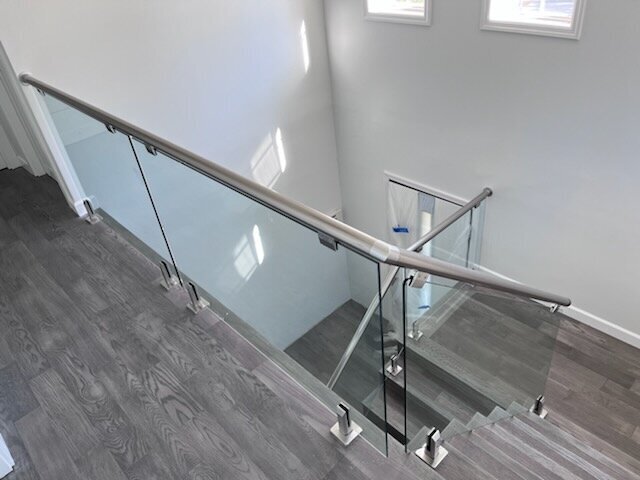
● Glass panels provide clear views through tempered or laminated glass
● Vertical pickets remain popular and straightforward to install
● Horizontal patterns look contemporary but need careful spacing
Color affects comfort. Dark finishes get hot in direct sun. Light colors reflect heat but show dirt faster.
Safety Railing Styles for Outside Steps


Local Code Requirements and Inspections
Your city or county might have stricter rules than the baseline. Coastal areas often require better corrosion protection and higher wind ratings. Historic districts may limit materials or designs.
Building permits require inspections at different stages. Check with your local building department before starting work.
Understanding Load Requirements
Check annually for loose connections, rust, damage, or rot. Tighten loose hardware. Replace corroded bolts. Refinish wood to prevent moisture damage.
Understanding Florida building code stair handrail requirements helps you plan compliant outdoor stair projects. Always check with your local building department before starting work.

We provide free estimates and service South Florida - Palm Beach County, Broward County and Miami-Dade County. All of our material is available & in stock making, turnaround time currently at 2-3 weeks (subject to change) for installations and for shipping orders within 5 business days in US & abroad.
Modern Railing Co has top quality material, industry experience, dedication to service, make us different than others. We will deliver your expectations!
Modern Railing Co's aluminum railing & glass railing systems are available in various styles to complement residential and commercial settings. Main features include:
* Strong and durable construction (weatherproof)
*3/8 & 1/2 inch Tempered Glass
*9/16, 11/16 and 13/16 Laminated Tempered Glass
* Extremely long service life
* Unique finish (anodizing) which fulfills high quality standards (doesn't rust or corrode).
* High resistance to UV radiation (doesn't flake or crack)
* Flexible designs
* Easy maintenance
* All items are in stock