Call For estimate
Glass Railings
Black Aluminum Railings
Dark & Light Wood Railings
Aluminum Railings
Call (561)672-0717

Knee Wall Railings
Fascia Mount Railings
Indoor Stair & Surface Mount Railings
Outdoor Stair & Surface Mount Railings
Handrails
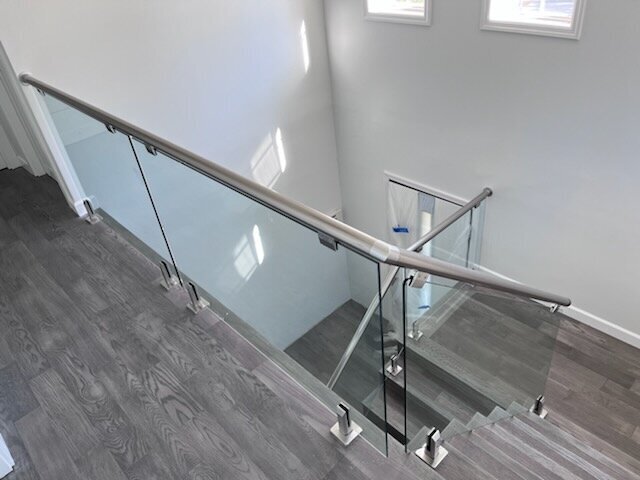
Standoff-Pins Glass Railing Systems
Glass Railing Post Systems
Indoor stair and surface mount railing options give you more choices since they're protected from weather. Wood adds warmth and fits with traditional home styles, but keeping a consistent diameter for ADA compliance gets tricky. Wood also needs more upkeep as it wears down over time.
Aluminum handles repeated use without developing rough spots that can snag your hand. It also cleans easily, which matters more than most people realize. Handrails get touched constantly, and wiping them down keeps them sanitary.
Stainless steel looks contemporary and works well in modern homes. It holds up to daily use and cleans easily, though it costs more than other options, especially if you need custom angles or configurations.

How to Choose the Right Handrail for Your Indoor or Outdoor Stairs (ADA & Style)
Falls on stairways send roughly one million Americans to emergency rooms each year. Many of these injuries could be prevented with a functional handrail. Not all handrails work the same way, though. Understanding what makes a handrail actually safe versus just decorative can help you avoid a serious fall.
Handrails vs Guardrails: What's the Difference?
People use these terms interchangeably, but they mean completely different things. A guardrail stops you from falling off the side of a stairway, deck, or balcony. It's basically a barrier that keeps you from going over the edge.
A handrail gives you something to grab onto as you go up or down stairs. It adds stability and support. Older guardrails sometimes have a small groove at the top where you can hook your fingers, but this pinch grip doesn't give you the strength to actually catch yourself if you slip. Modern handrail installations use designs that let your whole hand wrap around the rail. That full grip is what actually helps prevent falls.

The Americans with Disabilities Act has specific standards for handrails in commercial spaces. Many residential building codes follow similar rules now. These aren't random requirements. They come from years of studying what actually keeps people safe on stairs.
Getting the Height and Spacing Right
Handrails need to sit between 34 and 38 inches above the stair nosing or ramp surface. The gap between the rail and the wall has to be at least 1½ inches so your fingers can fit underneath without hitting the wall. This spacing is required for ADA compliance.
Why Extensions and Returns Matter
Handrails can't just stop at the top or bottom step. They need to extend at least 12 inches horizontally beyond the top of a stairway, starting right above the top riser. At the bottom, the rail keeps going at the same angle as the stairs, extending one tread depth past the last step. These extensions give you something to hold onto before you start climbing and after you finish going down. The ends of handrails also have to return to a wall or post instead of sticking out where they could catch on clothing or cause injuries.
The Continuous Grip Rule
One of the biggest ADA standards is about keeping your grip uninterrupted. Your hand needs to slide along the entire handrail without running into obstacles. This means brackets have to be L-shaped with the part that attaches to the wall sitting below the rail itself. Fascia mount railing installation works when you can't mount to a wall but still need to meet the continuous grip standard.
How you grip a handrail determines how much it can actually help you. A pinch grip, where you're using just your fingers and thumb, gives you only about 25% of your maximum grip strength. That's fine for holding a pen or picking up your phone, but not for stopping a fall.
A power grip uses your entire hand, with fingers wrapping toward your palm. This grip is five times stronger. For this to work, a handrail needs a circular diameter between 1¼ inches and 2 inches. Most people can wrap their hands completely around a rail in this size range, which maximizes their ability to hold on if they stumble.
Grip Strength and Handrail Design

Picking Materials for Inside Your Home

ADA Requirements You Should Know
What Works Outside
Outdoor stair and surface mount railing deals with sun, rain, temperature changes, and humidity. Wood can warp, split, or need frequent refinishing to stay looking good and structurally sound.
Wrought iron looks nice but rusts easily, especially near the coast or in areas with lots of rain. The textured finish that gives wrought iron its character also traps moisture, which speeds up corrosion.
Aluminum handles outdoor conditions better than other materials. It doesn't rust or corrode, stays stable through temperature swings, and only needs occasional cleaning. You can get it in different colors and finishes to match various architectural styles without giving up durability.
Private homes get more flexibility with handrail design than commercial buildings. You can use decorative handrails with unique shapes in single-family residences, though they won't provide the same level of safety as ADA-compliant designs.
Commercial buildings, public spaces, and common areas in apartment buildings have to meet ADA standards. This covers office buildings, stores, schools, hospitals, and shared stairways in any multi-unit residential building. These rules apply no matter when the building was built, which is why older buildings often need handrail updates.

Rules for Homes vs. Commercial Buildings
How to Decide What You Need
Start by figuring out which building codes apply to your project. Commercial projects need to meet both local building codes and ADA standards. Residential projects should check local requirements, which often follow ADA guidelines even when not legally required.
Think about who uses the handrail. Many homeowners now plan for aging in place, which makes ADA-compliant handrails a smart choice even in private homes. The same features that help people with mobility issues also help anyone carrying groceries, going up stairs in the dark, or dealing with wet conditions.
Be realistic about maintenance. A wood handrail that needs refinishing every year might not be practical, especially outside. You need to balance how it looks with how much time and money you want to spend keeping it up.
The right handrail combines safety features with materials that work in your environment and a design that fits your space. It's about more than just meeting code. It's about installing something people can actually count on for stability every day they use it.
We provide free estimates and service South Florida - Palm Beach County, Broward County and Miami-Dade County. All of our material is available & in stock making, turnaround time currently at 2-3 weeks (subject to change) for installations and for shipping orders within 5 business days in US & abroad.
Modern Railing Co has top quality material, industry experience, dedication to service, make us different than others. We will deliver your expectations!
Modern Railing Co's aluminum railing & glass railing systems are available in various styles to complement residential and commercial settings. Main features include:
* Strong and durable construction (weatherproof)
*3/8 & 1/2 inch Tempered Glass
*9/16, 11/16 and 13/16 Laminated Tempered Glass
* Extremely long service life
* Unique finish (anodizing) which fulfills high quality standards (doesn't rust or corrode).
* High resistance to UV radiation (doesn't flake or crack)
* Flexible designs
* Easy maintenance
* All items are in stock