Call For estimate
Glass Railings
Black Aluminum Railings
Dark & Light Wood Railings
Aluminum Railings
Call (561)672-0717

Knee Wall Railings
Fascia Mount Railings
Indoor Stair & Surface Mount Railings
Outdoor Stair & Surface Mount Railings
Handrails
Standoff-Pins Glass Railing Systems
Glass Railing Post Systems

How to Choose the Right LED Deck Railing Lights for Safety and Ambiance
A beautiful deck or balcony should not go dark the moment the sun sets. In South Florida, where evening pool parties, lanai dinners, and year-round outdoor living are part of daily life, integrated railing lighting is one of the smartest upgrades a homeowner can make. It extends the hours you can use your space, adds a real layer of safety to stairs and transitions, and completely changes how a deck feels after dark. This guide covers the most popular types of LED deck railing lights, what separates a fixture that lasts from one that falls apart in coastal conditions, and how to plan lighting into your next railing project.
Why Built-In Railing Lights Work Better Than Floodlights
Integrated railing lighting delivers soft, downward-facing illumination that outlines your deck's footprint and guides foot traffic without creating glare or blinding your guests.
A floodlight bolted to the side of the house does one thing. It throws a wide, flat wash of bright light across the entire yard. That is fine for security, but it is terrible for atmosphere and not particularly helpful for led deck railing lights safety. The light lands everywhere except where people need it most, like the edge of a step or the transition from deck to stairs.
Built-in deck railing lights solve that problem by placing the illumination at ankle and knee height, right along the surfaces where someone could trip or misstep. The result is a space that feels warm and inviting instead of overlit, and one where every edge and level change is clearly visible.
The three most common options are under-rail LED strips, illuminated post cap lights, and recessed stair riser lights. Each serves a different purpose, and many homeowners combine two or three for a layered effect.
Under-Rail LED Strips
These are thin LED strips mounted underneath the top rail, hidden from direct view. They cast a continuous, soft glow downward onto the deck surface. Under rail lighting ideas for Florida homes often favor this style because the strips stay concealed during the day and produce an even wash of light at night. They work especially well along long deck railing runs and around outdoor cooking areas where task lighting matters.
Post Cap Lights
Low voltage deck post lights sit on top of each railing post, marking the perimeter of the deck and creating a gentle rhythm of light around the space. They also serve a practical function by sealing off the top of the post from rain, debris, and insects. Solar and low-voltage versions are both available, though low-voltage models tend to produce more consistent brightness throughout the evening.
Stair and Step Riser Lights
For anyone looking for the best outdoor stair lighting for decks, recessed riser lights are the standard. These small fixtures mount directly into the vertical face of each stair riser or along the bottom rail near steps. They illuminate the tread below without creating a hot spot, making it easy to see each step in the dark. On multilevel decks and balcony railings with stair transitions, riser lights are not optional. They are a safety feature.
Side Mount Lights
Side mount fixtures attach directly to the face of the railing post and cast a gentle downward glow. They pair well with continuous top rail designs and give homeowners a way to add targeted light to specific areas of the deck without a full strip installation.
Landscape Lights at the Deck Base
Positioning lights around the base of the deck, along walkways, or near garden beds helps define the boundary between the deck and the yard. Path lights and wall wash fixtures create depth and make it easier for guests to navigate the space after sunset.
The Most Popular Types of LED Deck Railing Lights
LEDs consume up to 80% less energy than incandescent bulbs, last tens of thousands of hours, generate almost no heat, and attract fewer insects. For outdoor use in a humid, subtropical climate, there is no better option.
Low-voltage LED systems run on 12-volt current, which means a simple transformer plugged into a GFCI outlet is all that is needed. No electrician required. The fixtures draw so little power that running them every evening costs pennies, and the bulbs rarely need replacement.
In Florida, there is another practical advantage. Incandescent bulbs run hot, and hot light sources attract bugs. LEDs stay cool to the touch, which means fewer moths and mosquitoes swarming your deck at night.
Why LED Is the Standard for Outdoor Railing Fixtures
Low-Voltage vs. Solar Lighting for Decks
Low-voltage lighting is the most reliable and consistent option for deck railings. Solar is a solid backup for hard-to-reach areas or existing decks where running new wiring is not practical.
Low-Voltage Systems
Low-voltage LED deck railing lights plug into a transformer that converts 110-volt household current down to 12 volts. Because the current is so low, installation does not require a licensed electrician. These systems are compatible with dimmers and timers, giving full control over brightness and scheduling. For new deck builds or railing replacements, low-voltage is the recommended choice because wires and connectors can be tucked inside the railing structure for a clean look.
Solar Systems
Solar railing lights need no wiring and no transformer. A small solar panel collects energy during the day and powers the light at night through a photocell that activates automatically at dusk.
Maintenance is limited to occasional panel cleaning and battery replacement every one to three years. The trade-off is that solar fixtures are not compatible with dimmers or timers, and their output depends on how much direct sunlight the panel receives. In shaded or partially covered areas, performance can be inconsistent.
What South Florida Homeowners Should Look for in Outdoor Fixtures
Choose fixtures with a high IP rating for water resistance, and look for marine-grade materials that can handle salt air, UV exposure, and heavy summer rain.
Cheap plastic or standard steel fixtures will not survive long in Florida's coastal humidity. The salt air alone can corrode unprotected metal in a single season. For aluminum railings and other metal systems, powder-coated aluminum or marine-grade stainless steel fixtures are the right match. Look for an IP65 or IP67 rating on any fixture that will be exposed to direct rain or pool splash. That rating means the fixture is sealed against water intrusion and dust, which is critical for anything installed near the coast or around a pool deck.
Sealed LED modules also resist the moisture intrusion that comes with Florida's heavy summer downpours. A fixture rated for coastal conditions will hold up for years without clouding, corroding, or shorting out.

Planning Your Lighting Before Installation
The best time to plan railing lighting is during the railing design phase, not after the railing is already installed.
When lighting is part of the original railing plan, wiring can be routed inside posts and rails where it stays invisible. Retrofit installations are possible, but they often require surface-mounted conduit or adhesive strips that are harder to conceal. If you are already working with a contractor on a deck railing project, adding lighting at that stage saves time, money, and results in a much cleaner finished look.
Railing lighting is an investment that pays off every single evening. It turns a deck into a space that is usable, safe, and genuinely enjoyable long after sunset. And in South Florida, where outdoor living is not a seasonal luxury but an everyday reality, that kind of return is hard to beat.

We provide free estimates and service South Florida - Palm Beach County, Broward County and Miami-Dade County. All of our material is available & in stock making, turnaround time currently at 2-3 weeks (subject to change) for installations and for shipping orders within 5 business days in US & abroad.
Modern Railing Co has top quality material, industry experience, dedication to service, make us different than others. We will deliver your expectations!
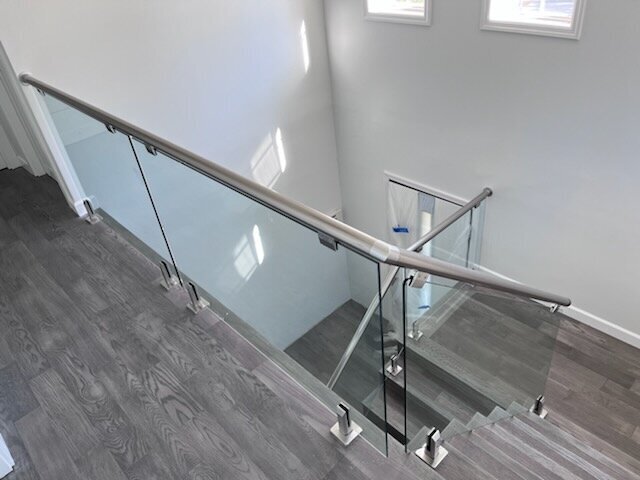
Modern Railing Co's aluminum railing & glass railing systems are available in various styles to complement residential and commercial settings. Main features include:
* Strong and durable construction (weatherproof)
*3/8 & 1/2 inch Tempered Glass
*9/16, 11/16 and 13/16 Laminated Tempered Glass
* Extremely long service life
* Unique finish (anodizing) which fulfills high quality standards (doesn't rust or corrode).
* High resistance to UV radiation (doesn't flake or crack)
* Flexible designs
* Easy maintenance
* All items are in stock