
Call For estimate
Glass Railings
Black Aluminum Railings
Dark & Light Wood Railings
Aluminum Railings
Call (561)672-0717

Knee Wall Railings
Fascia Mount Railings
Indoor Stair & Surface Mount Railings
Outdoor Stair & Surface Mount Railings
Handrails
Standoff-Pins Glass Railing Systems
Glass Railing Post Systems

How to Upgrade Your Florida Home's Railings for Senior Safety
South Florida is one of the most popular retirement destinations in the country, but most homes here were not designed with senior mobility as a priority. Open floor plans, tile throughout, and outdoor living spaces can become fall risks for someone with limited balance or joint issues. Upgrading to a safe aging in place handrail system is one of the most effective ways to prevent injuries and help seniors stay independent.
What Makes a Handrail Safe for Seniors?
A safe handrail for seniors must be continuous, securely anchored into wall studs or solid structure, and shaped so the hand can wrap fully around it.
That last part is the one most people overlook. A lot of decorative railings in Florida homes are wide, flat-topped, or ornamental. They look nice, but they are almost impossible to grip if someone loses their balance. A round or oval profile between 1.25 and 2 inches in diameter is the ideal shape for a handrail that supports real weight and grip strength.
The rail also needs to run continuously along the full length of the stairs or hallway. Breaks at newel posts, decorative interruptions, or rails that stop short of the landing leave gaps in support at the exact moments when a senior is most vulnerable.
The most critical locations are all interior and exterior staircases, the transition steps into sunken living rooms or garages, and pathways to outdoor pool decks or lanais.
Think about how someone moves through a South Florida home. Start at the front door. Are there steps up from the driveway or walkway? Is the entryway tile slick after a rainstorm? Move inside. A lot of homes built in the 1970s and 1980s in Boynton Beach, Delray Beach, and Wellington have sunken living rooms with a single step down. That one step, often on smooth tile with no railing in sight, sends more seniors to the emergency room than most people would expect. A short grab bar or surface-mounted railing at that transition point can prevent a serious fall.
Now go outside. Pool decks and lanais are a huge part of Florida living, and the steps leading to those areas are frequently wet. Exterior handrails at every set of outdoor steps, even if it is only two or three stairs, are not optional for aging in place.
Grab Bars for Sunken Living Room Transitions
These single-step transitions get ignored in most home safety assessments because they seem minor. But for a senior with limited hip or knee mobility, stepping down six inches onto a polished tile floor without anything to hold is a genuine hazard. Installing grab bars for sunken living room steps or short wall-mounted rails at these points is a simple aging in place handrail modification that makes an immediate difference.
Outdoor Steps and Wet Surfaces
A sloped driveway, garden path, or concrete steps leading to the backyard all benefit from sturdy outdoor handrails. In Florida, where afternoon rain is a daily occurrence for half the year, wet surfaces are unavoidable. A railing along a stone walkway or next to pool patio steps gives elderly residents something solid to hold.
Where to Install Handrails for Elderly Home Safety
Yes. Installing handrails on both sides of a staircase is strongly recommended for seniors because it provides bilateral support and accommodates people who may have one side weaker than the other.
Florida residential building codes typically require only one handrail on stairs. But building code minimums are not designed with aging in place in mind. ADA guidelines strongly recommend handrails on both sides, and for good reason. A person recovering from a stroke might only have reliable grip strength on their left side. Going up they need the left rail. Coming down, they need the right. Two rails means support on the strong side, no matter the direction.
Should You Install Handrails on Both Sides of a Staircase?
What Is the Difference Between a Standard Railing and an ADA Compliant Residential Stair Railing?
Private homes are not legally required to meet ADA commercial standards. But adopting these guidelines voluntarily is the smartest approach to handrails for elderly home safety. The extensions alone matter more than most people realize. A rail that continues 12 inches past the top and bottom of the stairs gives someone a stable handhold during the transition from stairs to level ground, which is when falls most commonly happen.
Practical Aging in Place Handrail Modifications Room by Room
The most impactful modifications go beyond staircases and address every transition point where a senior changes elevation or walks on a slippery surface.
Interior Priorities
Install continuous wall-mounted handrails along all interior staircases, on both sides. Add short grab rails at any sunken living room transition. Consider rails along long hallways too, particularly between bedrooms and bathrooms. That hallway route is one of the highest-risk zones for nighttime falls among seniors.
Exterior and Pool Areas
Add handrails at front entrance steps, garage entry steps, and pathways leading to the pool area or lanai. Pool decks in Florida homes are a constant source of slip-and-fall risk. Wet tile, wet pavers, and the transition from the deck down to the yard all need support. A well-placed railing at pool patio steps helps everyone, not only seniors.
Older homes throughout South Florida often have original railings that are loose, corroded, or no longer up to code. Wobbly posts, rusted connections, or rails that have pulled away from the wall are dangerous for anyone relying on that rail to bear their weight. If an existing railing moves when you push on it, a full railing repair or replacement may be necessary before any aging in place modifications can be effective.
When Railing Repair or Replacement Becomes Necessary
Making the Home Work for the Long Term
Modifying a home for aging in place is about preserving independence and dignity. A fall can change everything for a senior, from lost confidence to a hospital stay to a move out of the home entirely. Upgrading to secure, graspable handrails is a proactive step that provides real peace of mind for both seniors and their families.

An ADA compliant handrail meets strict federal standards for height, grip diameter, wall clearance, and extension length that go well beyond what a typical residential railing provides.
Most standard residential railings were built for code compliance, not mobility support. The difference between a decorative banister and a functional ADA compliant railing is significant.
We provide free estimates and service South Florida - Palm Beach County, Broward County and Miami-Dade County. All of our material is available & in stock making, turnaround time currently at 2-3 weeks (subject to change) for installations and for shipping orders within 5 business days in US & abroad.
Modern Railing Co has top quality material, industry experience, dedication to service, make us different than others. We will deliver your expectations!
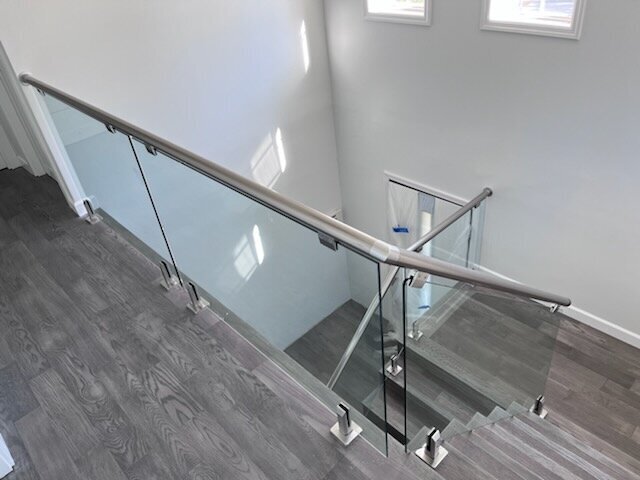
Modern Railing Co's aluminum railing & glass railing systems are available in various styles to complement residential and commercial settings. Main features include:
* Strong and durable construction (weatherproof)
*3/8 & 1/2 inch Tempered Glass
*9/16, 11/16 and 13/16 Laminated Tempered Glass
* Extremely long service life
* Unique finish (anodizing) which fulfills high quality standards (doesn't rust or corrode).
* High resistance to UV radiation (doesn't flake or crack)
* Flexible designs
* Easy maintenance
* All items are in stock
Request a Quote
South Florida GLass & Aluminum Railings
Check out our reviews on Google
About US
(561)672-0717
info@modernrailingco.com
980 North Federal Highway Suite 110
Boca Raton, FL 33432
Shipping Available in the US & Installation in South FLorida.
Contact Us