
Call For estimate
Glass Railings
Black Aluminum Railings
Dark & Light Wood Railings
Aluminum Railings
Call (561)672-0717

Knee Wall Railings
Fascia Mount Railings
Indoor Stair & Surface Mount Railings
Outdoor Stair & Surface Mount Railings
Handrails
Standoff-Pins Glass Railing Systems
Glass Railing Post Systems

Is Your Pool Fence Code Compliant? What Florida Homeowners Need to Know
Florida's year-round swimming weather is one of the best parts of living here. But with backyard pools comes real responsibility, especially when it comes to keeping kids safe. The statistics are sobering. Florida has the highest rate of drowning deaths for children ages 1-4 in the country, which is why pool safety isn't just good practice, it's required.
The Residential Swimming Pool Safety Act, found in Florida Statutes Chapter 515, lays out what you need to do to secure your pool. This guide walks through the requirements so you can make sure your setup is both safe and code compliant.
Florida Code Requires a Barrier Around Every Pool
If you have a residential pool, spa, or hot tub, Florida requires a barrier around it. There's no getting around this. The barrier has to physically separate your pool from the rest of your property.
How High Does Your Fence Need to Be?
The minimum is 4 feet, or 48 inches, measured from the outside. This applies whether you're using traditional fencing or something else. How high does a pool fence need to be in Florida? At least 48 inches statewide, though your city or county might ask for more in some cases.
When your pool barrier also works as a railing or guard
• Height: Balconies/porches/landings typically require a 36-inch guard in residential settings; stairs are measured the same for guard height, but handrails have different height rules.
• Openings: Balconies/landings generally must block a 4-inch sphere. On the open side of stairs, the opening limit is typically a 4 3/8-inch sphere, with a larger 6-inch limit at the stair “triangle” (tread/riser/bottom rail area).
• Strength: Guards have structural load requirements too—commonly 50 pounds per linear foot along the top rail and a 200-pound concentrated load—so the system has to be anchored to handle real force, not just look tall enough.
What About Gaps and Openings?
Your barrier can't have gaps big enough for a child to squeeze through. Florida uses what's called the "4-inch sphere rule" for vertical spacing. If a 4-inch ball fits through any opening in your fence, it doesn't meet code.
The gap between your fence and the ground matters too. You can't have more than 2 inches of clearance, otherwise a child could crawl under.
Gates are where most barrier systems fail. Pool gate latch regulations Florida requires are pretty specific, and they all have to work together.
Your gate has to swing away from the pool, not toward it. This keeps a child from pushing it open and heading straight for the water.
The gate needs to close on its own without anyone touching it. That's the self-closing part. It should shut with enough force to work reliably every single time.
Once closed, the latch needs to catch automatically. The self-latching mechanism shouldn't need you to manually engage it. And here's an important detail: the release mechanism has to sit at least 54 inches off the ground, or be on the pool side of the gate where small children can't reach it from outside.
The Gate Features Florida Code Requires
Can You Use Your House as Part of the Barrier?
Yes, many Florida homes do this. Your exterior wall can count as part of your barrier, but that creates some extra requirements.
Any door or window that opens directly to the pool area needs an alarm. These alarms have to be loud enough to hear throughout your house, not just near the door. They alert you when someone opens that access point.
Some homeowners add self-closing and self-latching devices to these doors as well. You can use both alarms and self-closing mechanisms together for extra protection. The same latch height rules apply here too.
Beyond height and spacing, pool fence requirements Florida residential properties follow also cover how strong your barrier needs to be. It has to resist someone trying to force their way through and meet minimum load requirements without breaking, bending, or pulling loose from its anchors. As a practical reference, guard/railing systems are commonly designed for about 50 pounds per linear foot along the top and a 200-pound concentrated load applied at any point along the top rail.
If your fence has horizontal rails on the outside, they need to be spaced at least 45 inches apart vertically. Anything closer can work like ladder rungs.
Decorative patterns are fine, but they can't create places for hands or feet to grab onto. Any decorative opening can't be bigger than 1¾ inches.
Modern Pool Fence Designs That Pass Inspection
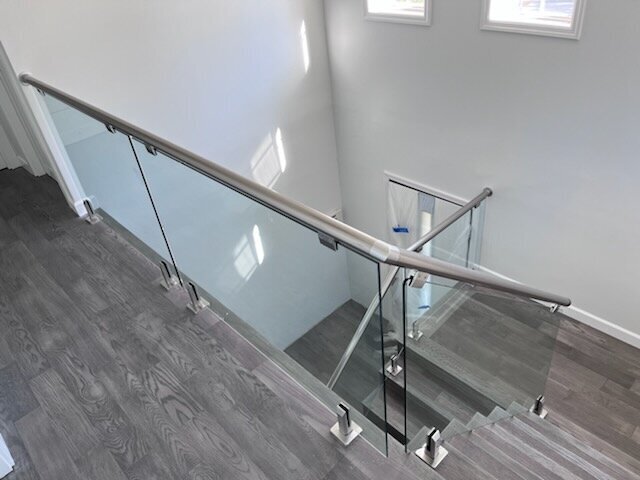
Meeting Florida's requirements doesn't mean your fence has to look institutional. Modern glass pool fences give you clear sightlines while hitting all the height and spacing requirements. Frameless systems use tempered safety glass that's strong enough to meet code and looks clean and open.
Aluminum railings are another solid choice. They hold up well in Florida's humidity and salt air without rusting. The vertical picket design naturally meets spacing requirements while letting air flow through and keeping visibility high.
If you want maximum security, safety pool fences built to ASTM F2286 standards offer features beyond basic code compliance. Some of these are removable mesh systems, which work well for seasonal use or rental properties.
Pool Fence Strength and Construction Requirements

Meeting code requirements keeps you compliant, but extra safety measures add more protection. Pool covers rated to ASTM F1346 standards can hold weight and keep people out when you're not using the pool. These work as an extra layer, though they don't replace required fencing.
Perimeter alarms detect movement near the pool and alert you before someone reaches the water. In-pool alarms sense disturbances on the water surface and notify you if someone enters.
Security cameras let you monitor your pool area visually and give you footage if something happens. Smart home systems can send alerts to your phone when pool access doors open or alarms go off.
Exit alarms on windows add another notification layer beyond required door alarms. These battery-powered devices attach easily and sound right when a window opens.

Your City Might Have Stricter Pool Fence Rules
Chapter 515 sets the baseline for the whole state, but your city or county might have tougher requirements. Coastal areas often want fences rated for higher wind speeds. Hurricane zones may require reinforced mounting and materials built for extreme weather.
If you're in the city with detailed permitting processes, you'll want to check with your local building department before installing or changing anything. Some places require detailed plans as part of your pool permit. Others send inspectors after installation to verify everything meets both state and local codes.
What Happens If You Don't Comply?
Not installing required safety features on a new pool is a second-degree misdemeanor in Florida. That means potential fines and possibly jail time.
Beyond criminal charges, you face serious liability if someone gets hurt or drowns because your barrier wasn't adequate. Your insurance might not cover incidents at non-compliant pools.
The attractive nuisance doctrine applies to pools, which means you have extra responsibility to protect kids who might wander onto your property without permission.
Code enforcement can issue citations with administrative fines on top of criminal penalties. Florida does give you a 45-day window after getting a summons to fix the problems before prosecution.
Florida requires you to submit a pool barrier affidavit describing your safety features. This becomes part of your property records. Pool contractors usually handle this during new construction, but if you're doing it yourself, you need to file the paperwork.
Building inspectors check that your barrier, gates, and locks meet the requirements. They'll test self-closing devices and measure latch heights. If you have alarms, they'll test those to make sure they're loud enough and working right.
Keep your manufacturer paperwork, compliance certificates, and installation records somewhere easy to find. These documents prove your components meet ASTM standards and local requirements.
What Happens During a Pool Fence Inspection

Installing a compliant barrier is just the start. You need to maintain it so everything works like it should.
Test your self-closing gates every month. Make sure they close all the way and the latch catches properly. Look for any settling or ground movement that might create gaps under your fence.
Check the strike plate and hinges on your gates every few months. Tighten anything loose before it becomes a real problem. Put some lubricant on moving parts so nothing binds up and stops the gate from closing right.
If something's worn out, replace it right away. A self-closing device that doesn't work anymore isn't providing the protection the code requires.
Clear plants and debris from where your gate swings so nothing blocks it from closing.
Pool Fence Maintenance That Keeps You Compliant

Safety Features That Go Beyond Basic Compliance
What Your Pool Barrier Needs to Be Code Compliant
Pool Safety Requirements Change. Here's How to Stay Updated.
Florida's pool safety codes are clear. Barriers need to be at least 4 feet high, can't have climbable gaps or openings, and must have self-closing, self-latching gates with release mechanisms positioned out of reach of small children. These requirements exist because too many young lives are lost to drowning every year.
This guide is meant to help you understand common Florida pool-barrier compliance checkpoints and what inspectors typically look for. Local amendments can be stricter than the state minimums, and requirements can change—especially if your barrier also functions as a guard/railing for balconies, landings, or stairs. Before you install or modify any pool barrier, confirm the current requirements with your local building department.
Pool safety regulations can change over time as research and standards evolve. Keep up with any updates to Chapter 515 that might affect what you already have installed.
Building departments usually send notifications about code changes, but it's smart to check yourself once a year.
Having a professional inspect your fence helps catch problems before they become violations. Many companies offer maintenance agreements with regular safety checks and small repairs included.
When you sell your home, a compliant pool barrier keeps the transaction smooth. Home inspectors specifically look for pool safety violations that could mess up closing or create liability for buyers.
We provide free estimates and service South Florida - Palm Beach County, Broward County and Miami-Dade County. All of our material is available & in stock making, turnaround time currently at 2-3 weeks (subject to change) for installations and for shipping orders within 5 business days in US & abroad.
Modern Railing Co has top quality material, industry experience, dedication to service, make us different than others. We will deliver your expectations!
Modern Railing Co's aluminum railing & glass railing systems are available in various styles to complement residential and commercial settings. Main features include:
* Strong and durable construction (weatherproof)
*3/8 & 1/2 inch Tempered Glass
*9/16, 11/16 and 13/16 Laminated Tempered Glass
* Extremely long service life
* Unique finish (anodizing) which fulfills high quality standards (doesn't rust or corrode).
* High resistance to UV radiation (doesn't flake or crack)
* Flexible designs
* Easy maintenance
* All items are in stock
Request a Quote
South Florida GLass & Aluminum Railings
Check out our reviews on Google
About US
(561)672-0717
info@modernrailingco.com
980 North Federal Highway Suite 110
Boca Raton, FL 33432
Shipping Available in the US & Installation in South FLorida.
Contact Us