Call For estimate
Glass Railings
Black Aluminum Railings
Dark & Light Wood Railings
Aluminum Railings
Call (561)672-0717

Knee Wall Railings
Fascia Mount Railings
Indoor Stair & Surface Mount Railings
Outdoor Stair & Surface Mount Railings
Handrails
Standoff-Pins Glass Railing Systems
Glass Railing Post Systems

Will Aluminum Rust in Salt Water? Coastal Railing Facts
If you live near the coast, you've seen what salt does to metal. When it's time to build or replace a deck, it's natural to ask: will aluminum rust in salt water? The short answer is no, aluminum doesn't rust. But understanding why helps explain how the right aluminum becomes the most reliable material for waterfront applications.
Rust vs. Aluminum Oxidation: What's the Difference?
Rust only happens with iron and steel. When they get wet, you get that reddish-brown flaky stuff that keeps spreading and eventually eats through the metal. Each layer forms, breaks off, and exposes more metal underneath.
Aluminum works differently. It forms aluminum oxide, a thin layer that actually protects what's underneath. Unlike rust, this layer sticks and doesn't keep breaking apart.
That protective oxide layer works fine in normal conditions. Salt is the problem. Chloride ions in saltwater attack and break down this barrier. The result is pitting corrosion, small holes in the metal surface that weaken the aluminum and create a white, chalky buildup.
Raw aluminum will show this damage in coastal environments. This is why not all aluminum works for waterfront railings. The material needs extra protection to handle constant salt exposure.
Salt Water's Effect on Aluminum
Powder coating provides the protection aluminum needs near saltwater. The process sprays a polymer resin onto the aluminum, then heat cures it into a thick, uniform coating that bonds to the metal.
This creates a sealed barrier. Oxygen and chloride ions can't reach the metal surface, preventing both oxidation and pitting. This coating beats regular paint, which chips and lets moisture underneath. Once paint fails, corrosion starts and spreads.
Powder-coated aluminum is standard for coastal installations. The coating holds up through years of salt spray, wind, and sun. Maintenance is just occasional soap and water cleaning.
Waterfront Railing Ideas for Salt Exposure
Styles That Maximize Your Ocean View
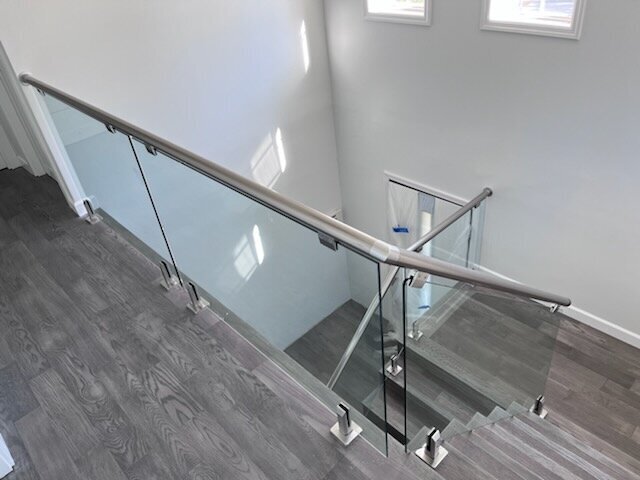
Powder-coated aluminum opens up design options other materials can't match. Glass panels with aluminum frames create transparent barriers that show off ocean views while providing safety and wind protection.
Cable systems are another popular choice. Horizontal or vertical cables between aluminum posts keep sightlines open while adding a contemporary look. The slim cables make decks feel larger and more connected to the water.
Powder-Coated Colors That Hold Up
Black aluminum railings have become popular for their clean, modern look. The black finish creates contrast against lighter decking or natural wood. Powder coating locks in the color. No fading happens, even after years of sun and salt.
Coastal fencing gets the same color stability. Perimeter fencing in charcoal, bronze, or custom colors keeps its original look without repainting. This matters for commercial waterfront properties where appearance affects business.
Wood-Look Aluminum Without the Upkeep
If you like the warmth of wood but need metal performance, powder coating can replicate wood textures and colors. Dark wood and light wood finishes on aluminum railings give you the look of timber without rot, splinters, or the maintenance wood requires near saltwater.
How Powder Coating Protects Against Saltwater Corrosion
Installing Aluminum Railings in Coastal Locations
Aluminum's lighter weight makes installation easier than steel or wrought iron. Sections are simpler to move and position, reducing labor time. The material can be cut and fitted on-site for irregular deck layouts or tricky architectural features.
Secure fastening matters in high-wind coastal areas. Stainless steel hardware prevents corrosion where different metals meet. Posts need solid anchoring to structural framing, and connections must account for local wind loads.
Contractors experienced with coastal installations understand local building codes and wind requirements. They know the challenges salt air presents. Good installation extends the life of any material.
Choosing Waterfront Railing Material
Every coastal property has different needs based on exposure, style, and local rules. Aluminum railing systems adapt to almost any setup. Curved sections follow rounded deck edges. Angled panels handle stairs and level changes. Custom heights meet code requirements for different uses.
Infill options go beyond glass and cable. Vertical pickets give a more traditional look while keeping the corrosion resistance of powder-coated aluminum. Horizontal bars create clean, modern lines. Privacy panels add wind protection or screening where needed.
Post caps, brackets, and decorative elements come in matching finishes. This creates designs that look intentional rather than pieced together.
Wood looks traditional but needs constant maintenance near saltwater. Annual sealing, rot inspections, and eventual replacement make wood expensive over time. Splinters and warping add safety issues.
Steel is strong but corrodes without constant upkeep. Even galvanized steel eventually rusts when the zinc coating wears through. Once rust starts, it spreads fast in coastal environments.
Vinyl needs little maintenance and handles moisture well. But it lacks aluminum's strength and can get brittle with age. Fading happens in direct sunlight, and cracks develop from temperature changes or impacts.
Aluminum vs. Wood, Steel, and Vinyl Near the Coast


Long-Term Performance Near Saltwater
Aluminum railings typically last 30 years or more with minimal work. The upfront cost is higher than wood or vinyl, but no maintenance costs, repairs, or early replacement makes aluminum more economical over time.
Quality materials affect property value. Buyers recognize durable, good-looking railings that won't need immediate work. Coastal homes with well-installed aluminum systems often sell faster and for more than properties with deteriorating wood or rusted metal railings.
Custom Options for Waterfront Properties
Raw aluminum doesn't rust, but it needs treatment to handle saltwater. Pitting and oxidation will happen without protection. Powder-coated aluminum built for marine environments solves this.
Natural corrosion resistance plus protective coatings creates a material that handles conditions that destroy other options. Low maintenance frees up time and money for enjoying your waterfront property instead of constantly fixing it.
Design flexibility means you don't give up looks for durability. Modern systems deliver both, creating outdoor spaces that add to your property's value while standing up to decades of salt spray and coastal weather.
We provide free estimates and service South Florida - Palm Beach County, Broward County and Miami-Dade County. All of our material is available & in stock making, turnaround time currently at 2-3 weeks (subject to change) for installations and for shipping orders within 5 business days in US & abroad.
Modern Railing Co has top quality material, industry experience, dedication to service, make us different than others. We will deliver your expectations!
Modern Railing Co's aluminum railing & glass railing systems are available in various styles to complement residential and commercial settings. Main features include:
* Strong and durable construction (weatherproof)
*3/8 & 1/2 inch Tempered Glass
*9/16, 11/16 and 13/16 Laminated Tempered Glass
* Extremely long service life
* Unique finish (anodizing) which fulfills high quality standards (doesn't rust or corrode).
* High resistance to UV radiation (doesn't flake or crack)
* Flexible designs
* Easy maintenance
* All items are in stock