Call For estimate
Glass Railings
Black Aluminum Railings
Dark & Light Wood Railings
Aluminum Railings
Call (561)672-0717

Knee Wall Railings
Fascia Mount Railings
Indoor Stair & Surface Mount Railings
Outdoor Stair & Surface Mount Railings
Handrails
Standoff-Pins Glass Railing Systems
Glass Railing Post Systems

Indoor vs. Outdoor Railings: Why the Difference Matters More in Florida Than Anywhere Else
Most homeowners assume a railing is a railing. Pick a style you like, install it, and move on. In most parts of the country, that logic holds up reasonably well. In South Florida, it can lead to premature failure, unexpected repair costs, and real safety problems. The gap between an indoor railing and an outdoor railing is bigger than most people realize, and Florida's climate makes that gap even wider.
This guide breaks down the key indoor vs outdoor railing differences, explains what materials hold up in Florida's environment, and helps you avoid a common and expensive mistake.
What Is the Fundamental Difference Between Indoor and Outdoor Railings?
Outdoor railings are built to resist weather exposure, including UV radiation, moisture, temperature swings, and corrosion. Indoor railings are designed primarily for aesthetics and structural support in a climate-controlled space.
That difference shows up in three areas: the materials used, the finishes applied, and the structural standards the railing has to meet. For example, an indoor stair and surface mount railing might use a thinner aluminum profile with an anodized or decorative finish, because it never has to deal with rain or salt air. An outdoor stair and surface mount railing needs a heavier profile, a UV-stable powder-coated finish, and hardware that won't corrode over time.
Interior railing design offers more flexibility because the environment is predictable. You can use a wider range of materials, thinner profiles, and finishes that prioritize looks over toughness. Outdoors, durability has to lead the conversation.
Florida's combination of intense UV, salt air, and high humidity means outdoor railings degrade significantly faster than in most other climates. Material selection and finish quality become critical.
South Florida receives more UV radiation than almost any other part of the continental U.S. That constant sun breaks down finishes and weakens certain materials faster than homeowners expect. Salt air from the Atlantic and the Intracoastal Waterway accelerates corrosion, especially within five miles of the coast. And humidity consistently sits above 70%, which causes wood to swell, warp, and eventually rot.
A railing that lasts 20 years in a dry northern climate might show serious deterioration in 7 to 10 years near the coast if the wrong material or finish is used. That is the core reason why outdoor railing materials in Florida need to be chosen with the local environment in mind, not based on what looks good in a catalog.
How Florida's Climate Changes the Equation
Outdoor railings require materials and finishes rated for weather exposure. Powder-coated aluminum, marine-grade stainless steel, or tempered and laminated glass are the go-to options. Indoor railings allow for a much broader range.
Here is a side-by-side breakdown of how the two categories compare:
Key Material Differences Between Indoor and Outdoor Railings
What About Screened Lanais and Covered Patios?
In Florida, screened lanais and covered patios should be treated as outdoor environments for railing purposes. They are still fully exposed to humidity, salt air, and temperature fluctuations.
This is where a lot of homeowners get tripped up. A lanai might feel like an indoor space, and it might even look like one. But if it is not fully enclosed and climate-controlled, the air around the railing is the same corrosive air that hits an open deck or balcony. The screen blocks bugs. It does not block moisture or salt.
The same logic applies to covered patios and open-plan living areas that flow from the interior to the outdoors. Any railing in a non-climate-controlled space should be built with outdoor-rated materials and finishes, regardless of the roof or screen enclosure above it.
Common Challenges and How to Handle Them
Indoor Railing Challenges
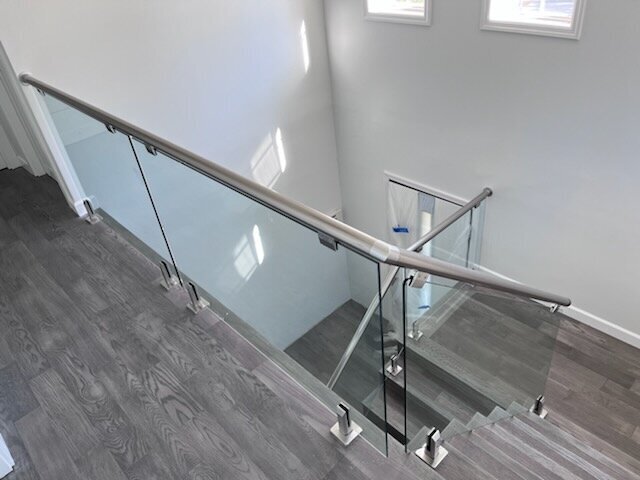
Matching a railing to an existing interior design scheme can be difficult, especially in homes with a mix of traditional and modern elements. Custom-designed interior glass railings or floating stair railings offer enough flexibility to work with almost any style. In tight spaces like narrow staircases, slim-profile systems or frameless glass help a railing feel less bulky while still meeting code.
Maintenance indoors is lower overall, but glass panels need regular cleaning with non-abrasive products, and metal finishes benefit from occasional inspection for loose fittings.
Outdoor Railing Challenges
The biggest outdoor challenge in Florida is corrosion. A railing for humidity and salt air needs every component, from the posts to the smallest fastener, to be rated for that environment. If one piece fails, it compromises the whole system. Annual washing with mild soap and water removes buildup that accelerates wear, and a visual inspection after hurricane season can catch damage early.
Structural stability is another concern. Temperature changes cause materials to expand and contract, and over time, connections can loosen. Professional installation with corrosion-resistant fasteners reduces the likelihood of this, but routine checks are still a good idea.

Indoor and outdoor railings serve different purposes and face very different conditions, but they share one requirement: they need to be installed correctly the first time. A licensed contractor understands Florida's outdoor stair railing requirements, the Florida Building Code wind load standards for exterior applications, and the IRC code requirements for interior installations.
Unpermitted railing work is a common source of problems during home sales and inspections. Working with an experienced railing installer means the project gets permitted, built to code, and inspected.
Why Professional Installation Matters for Both

Getting the Indoor/Outdoor Decision Right
The indoor vs outdoor railing distinction is not a technicality. It is a practical guide to choosing a system that will look great, perform safely, and last for years in its actual environment. In Florida, the stakes are higher than in most places. The sun, the salt, and the humidity put more stress on exterior materials than almost any other climate in the country.
Getting this decision right from the start is the most cost-effective approach. It avoids early replacements, keeps your home safe, and means you are not dealing with a railing that was never designed for the conditions it faces every day.

Why Aluminum Performs Well in Both Settings
Aluminum railings are popular for both indoor and outdoor applications, but the finish matters more than the metal itself. Indoors, a simple anodized coating looks clean and holds up fine in a controlled environment. Outdoors in Florida, that same anodized finish will degrade under UV and salt exposure. A high-quality powder coat creates a sealed barrier that resists fading, chalking, and pitting from salt-laden air.
Glass and Stainless Steel Considerations
Glass railings work beautifully in both environments, but outdoor installations in Florida benefit from laminated glass panels that add an extra layer of impact resistance. For hardware and connectors, marine-grade stainless steel is the standard for any outdoor railing in a coastal area. Standard-grade hardware will show signs of tea staining and corrosion within a few years when exposed to humidity and salt air.
We provide free estimates and service South Florida - Palm Beach County, Broward County and Miami-Dade County. All of our material is available & in stock making, turnaround time currently at 2-3 weeks (subject to change) for installations and for shipping orders within 5 business days in US & abroad.
Modern Railing Co has top quality material, industry experience, dedication to service, make us different than others. We will deliver your expectations!
Modern Railing Co's aluminum railing & glass railing systems are available in various styles to complement residential and commercial settings. Main features include:
* Strong and durable construction (weatherproof)
*3/8 & 1/2 inch Tempered Glass
*9/16, 11/16 and 13/16 Laminated Tempered Glass
* Extremely long service life
* Unique finish (anodizing) which fulfills high quality standards (doesn't rust or corrode).
* High resistance to UV radiation (doesn't flake or crack)
* Flexible designs
* Easy maintenance
* All items are in stock