Call For estimate
Glass Railings
Black Aluminum Railings
Dark & Light Wood Railings
Aluminum Railings
Call (561)672-0717

Knee Wall Railings
Fascia Mount Railings
Indoor Stair & Surface Mount Railings
Outdoor Stair & Surface Mount Railings
Handrails
Standoff-Pins Glass Railing Systems
Glass Railing Post Systems

Can Your Deck Railing Survive a Hurricane? What Coastal Florida Homeowners Need to Know
Living in South Florida means your home's exterior components need to do more than look good. Storm season transforms every element of your property into part of your defense system. Railings stand exposed on decks, balconies, and patios, facing tropical winds and flying debris head-on.
The difference between a railing that survives a hurricane and one that fails comes down to engineering, materials, and how it's installed. Coastal homeowners face unique challenges that demand specific solutions built for high-wind zones.
Unique Challenges Coastal Homeowners Face in High Wind Zones
Hurricane-resistant railing systems are engineered and tested to withstand the extreme conditions found in major storms. These systems must meet strict Florida Building Code requirements while providing the safety and appearance homeowners expect.
Two Types of Strength That Matter in Storms
Wind load resistance measures how much horizontal force a railing can handle before failing. In South Florida, that means withstanding sustained winds over 140 mph, with gusts reaching far higher. The Florida Building Code sets specific thresholds based on your location's wind zone.
Impact resistance addresses a different threat. During hurricanes, airborne debris turns ordinary objects into dangerous projectiles. Glass panels need laminated construction that holds shattered glass in place rather than creating additional hazards. This is especially critical for coastal homes with impact glass railings that face direct exposure during severe weather.
Why Laminated Glass Outperforms Tempered
Standard tempered glass shatters into thousands of small pieces once broken. Less dangerous than large shards, but this still creates a complete failure of your railing barrier. Laminated glass uses a polymer interlayer between two glass panes that holds fragments together even after impact.
This construction method serves multiple purposes. The intact barrier continues protecting against falls even after being damaged. The interlayer also absorbs impact energy, making it significantly harder to penetrate. For properties near the coast, this technology provides transparent views with the storm protection needed in hurricane-prone areas.
The Hidden Strength in Mounting Systems
The strongest glass or aluminum components fail without the right mounting systems. Installation teams focus on substrate preparation, fastener selection, and load distribution. Each post must transfer wind forces into the building structure without creating weak points.
Coastal installations need additional considerations. Saltwater exposure accelerates corrosion on standard fasteners, so marine-grade stainless steel becomes necessary. Base plates need larger footprints to spread forces across more surface area. These details separate systems that survive storms from those that don't.
Got Questions? Here's What Coastal Homeowners Want to Know
Best Materials for Coastal Hurricane Protection
Aluminum alloys dominate the hurricane-resistant railing market for good reason. The metal naturally resists salt corrosion while providing excellent strength-to-weight ratios. Powder-coated finishes protect against UV degradation and maintain appearance in harsh coastal conditions.
Aluminum's lightweight nature also helps during storms. Less mass means less potential damage if a section fails, and aluminum flexes under load rather than shattering, absorbing energy from wind gusts without permanent deformation.
Glass selection matters just as much. Low-iron glass railings provide crystal-clear transparency but cost more than standard options. Tempered laminated glass combines impact resistance with fail-safe behavior if broken, with thickness ranging from 1/4 inch for protected locations to 1/2 inch or more for exposed oceanfront installations.
Metal railings in direct sunlight raise legitimate concerns for Florida homeowners. Aluminum's heat conductivity works in your favor compared to materials that absorb and retain thermal energy. The metal disperses heat efficiently rather than building dangerous surface temperatures.
Color selection influences comfort levels significantly. Light colors reflect solar radiation most effectively, keeping surfaces touchable even during peak afternoon sun. Textured finishes disperse heat better than smooth surfaces. Dark colors work well for shaded areas but should be avoided in locations with full sun exposure throughout the day.
How Installation Methods Affect Storm Performance
Color Selection That Influences Comfort Levels During Peak Afternoon Sun

Hurricanes create enough stress without worrying about your home's structural components. Knowing your railings meet or exceed current code provides genuine peace of mind during storm season.
The investment pays dividends beyond storm protection. Insurance companies often reduce premiums for homes with impact-resistant features. Property values increase with upgrades that enhance both safety and appearance, and future buyers value code-compliant installations that need no immediate work.
But the best materials installed incorrectly still fail. Engineering, quality products, and skilled installation work together to create systems that protect your family and property for decades.

Understanding the Investment Value
Selecting the Right System for Your Property Based on Exposure Level
Your specific location and exposure level determine which specifications provide adequate protection. Oceanfront properties facing direct wave action and unobstructed wind need more robust systems than properties several blocks inland. Understanding these differences helps you invest appropriately without over-building or under-protecting.
Glass thickness, post spacing, and mounting methods all scale based on your wind zone classification and debris impact potential. A licensed hurricane shutter contractor evaluates your property's exposure, building structure, and architectural requirements to recommend appropriate specifications.
This assessment considers local building department interpretations of code requirements that sometimes exceed minimum standards.
Metal railings in direct sunlight raise legitimate concerns for Florida homeowners. Aluminum's heat conductivity works in your favor compared to materials that absorb and retain thermal energy. The metal disperses heat efficiently rather than building dangerous surface temperatures.
Color selection influences comfort levels significantly. Light colors reflect solar radiation most effectively, keeping surfaces touchable even during peak afternoon sun. Textured finishes disperse heat better than smooth surfaces. Dark colors work well for shaded areas but should be avoided in locations with full sun exposure throughout the day.
Coastal installations come with specific challenges. Teams need to account for building movement during storms, thermal expansion in extreme heat, and the constant stress of salt air. Without the right technique, every connection point becomes a potential failure location.
Base plate mounting needs special attention. Concrete substrates require adequate anchoring depth with epoxy-set fasteners rated for your wind zone. Wood framing needs blocking installed during construction to handle concentrated loads at post locations. Fascia mounting calls for through-bolting to structural members.
Post spacing follows engineered specifications tested for your glass thickness and wind loads. Reducing posts to save money compromises structural integrity. But adding posts beyond specifications won't necessarily improve performance and can actually create stress concentration issues.
We provide free estimates and service South Florida - Palm Beach County, Broward County and Miami-Dade County. All of our material is available & in stock making, turnaround time currently at 2-3 weeks (subject to change) for installations and for shipping orders within 5 business days in US & abroad.
Modern Railing Co has top quality material, industry experience, dedication to service, make us different than others. We will deliver your expectations!
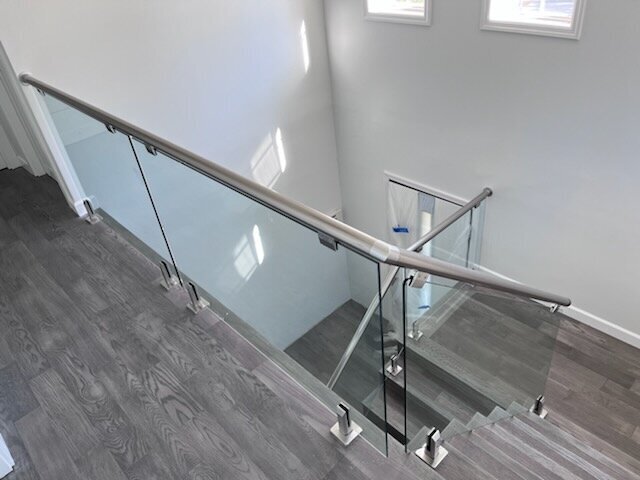
Modern Railing Co's aluminum railing & glass railing systems are available in various styles to complement residential and commercial settings. Main features include:
* Strong and durable construction (weatherproof)
*3/8 & 1/2 inch Tempered Glass
*9/16, 11/16 and 13/16 Laminated Tempered Glass
* Extremely long service life
* Unique finish (anodizing) which fulfills high quality standards (doesn't rust or corrode).
* High resistance to UV radiation (doesn't flake or crack)
* Flexible designs
* Easy maintenance
* All items are in stock
Request a Quote
South Florida GLass & Aluminum Railings
Check out our reviews on Google
About US
(561)672-0717
info@modernrailingco.com
980 North Federal Highway Suite 110
Boca Raton, FL 33432
Shipping Available in the US & Installation in South FLorida.
Contact Us