Call For estimate
Glass Railings
Black Aluminum Railings
Dark & Light Wood Railings
Aluminum Railings
Call (561)672-0717

Knee Wall Railings
Fascia Mount Railings
Indoor Stair & Surface Mount Railings
Outdoor Stair & Surface Mount Railings
Handrails
Standoff-Pins Glass Railing Systems
Glass Railing Post Systems

How Florida's Condo Inspection Law Affects Pompano Beach Balconies
If you own a unit or sit on a board in one of Pompano Beach's older waterfront buildings, you have probably heard the term milestone inspection raised at association meetings. The worry underneath it tends to be the same one. What happens if the balcony railings fail, and who ends up paying for the fix.
The Florida condo milestone inspection law tied to SB 4-D applies to your building, and balcony railings are among the first things an engineer evaluates, because corroded rails and failing anchors often signal deeper concrete trouble.
Knowing the timeline and what pushes a railing from repair to full replacement gives a board far more control over cost and scheduling than waiting for a citation to force the issue.
What is SB 4-D and how does the milestone inspection law reach balcony railings?
Senate Bill 4-D is the Florida law requiring structural milestone inspections for every condominium and cooperative building three stories or taller, and balcony railings fall within the scope an engineer reviews. The legislation took effect in 2022 after the 2021 Champlain Towers South collapse in Surfside, which killed 98 people and exposed years of deferred structural maintenance along the coast.
The rules now live in Florida Statute 553.899. A Phase 1 inspection is a visual review by a licensed engineer or architect looking for signs of substantial structural deterioration. If that review raises real concern, a Phase 2 follows with deeper testing and a repair plan. Lawmakers reworked the original bill through SB 154 in 2023 and later updates, so a few of the early thresholds people still quote have shifted.
What do engineers look for during a balcony railing inspection?
How does the 25-year coastal rule apply to Pompano Beach condos along A1A?
Does a failed railing mean repair or full replacement?
A railing can be repaired if the damage stays localized and the anchor and slab remain sound, but full replacement becomes the requirement once corrosion spreads through the system or reaches the structure behind it.
Engineers base the call on how far the deterioration has traveled, not on appearance alone, which is why condo balcony railing replacement decisions in Florida often hinge on the concrete more than the metal.
How do structural integrity reserve studies fund railing replacement?
A Structural Integrity Reserve Study, known as SIRS, is a separate required assessment that calculates how much an association must set aside for major structural components, and railings can fall under that funding once they are part of the building's structural system.
SB 4-D created the SIRS requirement alongside the milestone inspection, and unit owners can no longer vote to waive these reserves the way they once could.
For a board, this reshapes the math. A structural integrity reserve study that accounts for railing work means the funding is planned rather than scrambled for through a sudden special assessment.
Buildings that fold realistic railing costs into the SIRS tend to face fewer surprises once a milestone inspection report lands.


Should your HOA replace balcony railings before the milestone inspection?
Yes, replacing visibly deteriorated railings ahead of the milestone inspection usually gives a board more control over timing, budget, and contractor selection than waiting for the report to dictate the terms. A proactive replacement lets the association schedule around residents and compare bids without time pressure instead of reacting to a hard deadline.
There is a compliance angle as well. Staying ahead of Florida condo inspection law requirements protects board members from the liability that follows a knowing failure to act, and it keeps the building's reserves and insurance standing in better shape.
Associations handling railing projects across Pompano Beach often coordinate the timing so the new systems already meet current code before an engineer ever walks the property.
Most coastal Pompano Beach buildings now follow a 30-year statewide trigger for the first milestone inspection, although local agencies in saltwater zones can still require it at 25 years. The original SB 4-D set an automatic 25-year deadline for buildings within three miles of the coastline. SB 154 removed that automatic rule and handed the decision to local enforcement agencies, which may keep the earlier timeline based on environmental conditions such as proximity to salt water.
For the high-rises along the A1A corridor, the distinction matters less than it first sounds. Many of these buildings have already passed both the 25 and 30 year marks, so inspection obligations apply either way. A board's safer move is confirming the exact deadline with the city building department instead of assuming the old coastal rule still runs on its own.
An engineer examines balcony railings for corrosion, loose or failing anchor points, and any movement that hints at weakened concrete behind the mounting surface. Rails take constant salt spray and wind load on the coast, so they often show the first visible evidence of a problem the rest of the structure is still hiding.
This is also the point where the condition of the balcony railing systems on each unit connects to the larger structural picture. A loose post is rarely only a loose post. It can mean water has reached the embedded steel and started the corrosion cycle that eats into the slab edge.
How concrete spalling and weakened anchor points reveal bigger problems
Concrete spalling occurs as embedded steel rusts, expands, and pushes the surrounding concrete until it cracks and breaks away, often right at a railing anchor. Engineers treat spalling near a railing base as a warning sign rather than a cosmetic flaw, because the same corrosion loosening the anchor is usually reaching the structural reinforcement.
Salt air speeds this up across South Florida, which is part of why coastal balconies age faster than identical structures built inland. A rust stain bleeding from a post base, or a railing that shifts under hand pressure, is the kind of detail that moves a Phase 1 review toward a Phase 2 investigation.
This is the stage where many boards bring in a contractor to handle the repair or replacement of corroded railings, since the new work has to meet current wind load and code standards rather than match whatever was installed decades ago.
We provide free estimates and service South Florida - Palm Beach County, Broward County and Miami-Dade County. All of our material is available & in stock making, turnaround time currently at 2-3 weeks (subject to change) for installations and for shipping orders within 5 business days in US & abroad.
Modern Railing Co has top quality material, industry experience, dedication to service, make us different than others. We will deliver your expectations!
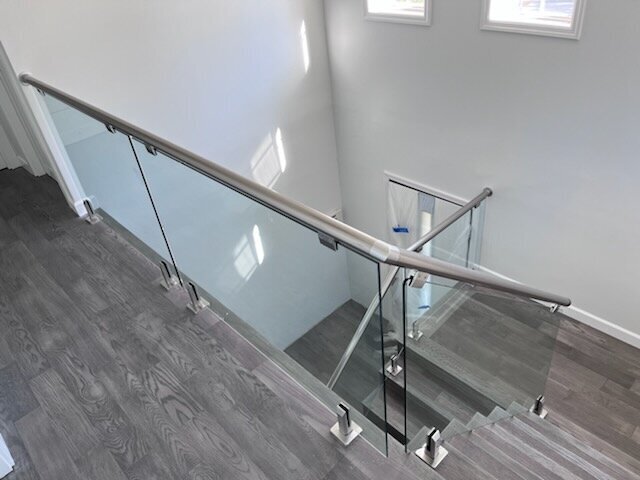
Modern Railing Co's aluminum railing & glass railing systems are available in various styles to complement residential and commercial settings. Main features include:
* Strong and durable construction (weatherproof)
*3/8 & 1/2 inch Tempered Glass
*9/16, 11/16 and 13/16 Laminated Tempered Glass
* Extremely long service life
* Unique finish (anodizing) which fulfills high quality standards (doesn't rust or corrode).
* High resistance to UV radiation (doesn't flake or crack)
* Flexible designs
* Easy maintenance
* All items are in stock
Request a Quote
South Florida GLass & Aluminum Railings
Check out our reviews on Google
About US
(561)672-0717
info@modernrailingco.com
980 North Federal Highway Suite 110
Boca Raton, FL 33432
Shipping Available in the US & Installation in South FLorida.
Contact Us