
Call For estimate
Glass Railings
Black Aluminum Railings
Dark & Light Wood Railings
Aluminum Railings
Call (561)672-0717

Knee Wall Railings
Fascia Mount Railings
Indoor Stair & Surface Mount Railings
Outdoor Stair & Surface Mount Railings
Handrails
Standoff-Pins Glass Railing Systems
Glass Railing Post Systems

The Pet Owner's Guide to Safer Deck and Balcony Railings
Your pets are family. Planning a deck renovation or upgrading your balcony means their safety deserves the same attention as any other aspect of your home. Most pet owners don't realize that standard railings can pose serious risks to dogs and cats until something goes wrong.
This guide addresses real concerns homeowners face while balancing beautiful outdoor spaces with the needs of their furry companions. From high-rise condos to pool areas, you can create a secure environment for your pets without sacrificing style.
What Makes Standard Building Code Railings Unsafe for Small Pets
Understanding potential hazards helps you make informed decisions about which railing system protects your pets best.
Wide Baluster Spacing and Small Pets
Building codes typically require baluster spacing no wider than four inches. This measurement prevents small children from getting their heads stuck between rails. However, many small dogs and most cats can slip through a four-inch gap without any trouble.
Puppies and smaller breeds face the highest risk. A Chihuahua, Yorkshire Terrier, or even a young Labrador can squeeze through standard spacing on second-story decks or balconies. For high-rise condo residents, this gap becomes a life-threatening issue.
Horizontal Rails That Encourage Climbing
Cats are natural climbers, and some dog breeds love to explore vertical spaces. Horizontal cable railings create the perfect ladder for adventurous pets. Each cable serves as a paw-hold, inviting your cat to scale the railing like a jungle gym.
Once at the top, pets can lose balance or misjudge distances. A curious cat on a balcony or an excited dog on a pool deck can find themselves in danger fast once horizontal elements make climbing too easy.
Material Deterioration and Chewing Risks
Wooden railings deteriorate in humid climates. As wood splits and splinters, it creates sharp edges that can injure paws and mouths. Pets who chew on railings may ingest wood fragments or paint chips containing harmful chemicals.
Metal railings with low-quality paint finishes also pose risks. Flaking paint exposes sharp rust spots and introduces toxic materials into your pet's system. The combination of salt air near coastal areas and pet marking behaviors speeds up deterioration on poorly protected metal.
Different pets have different needs. Finding the right railing should account for your pet's size, behavior, and activity level. Cat owners need solutions that prevent climbing and jumping, while dog owners often focus on strength and durability.
Glass Panel Systems for Pet Safety
Glass railings for homes with pets eliminate the gap problem entirely. Solid panels provide an unbroken barrier from top to bottom, making it impossible for even the smallest pets to slip through. Cats cannot climb smooth glass surfaces, and dogs cannot push through or damage the panels.
Cleaning is remarkably simple. A quick wipe removes nose prints and paw marks without special products. Glass doesn't absorb odors or stains, which matters once pets mark their territory. The transparent design maintains your view while keeping pets safely contained.
Tempered glass panels withstand significant impact. Large dogs leaning against the railing or jumping up to see over it won't damage well-installed glass systems. For pet proof balcony railing ideas, frameless glass offers both security and an open feel that doesn't make outdoor spaces feel caged.
Making Aluminum Railings Pet-Safe
Aluminum railings with pet-safe baluster spacing work well for pets with the right design. Vertical balusters prevent the climbing issue that horizontal cables create. Spacing balusters closer than the standard four inches keeps small pets from squeezing through.
Powder-coated aluminum railing systems resist chewing damage and won't splinter like wood. The coating protects against corrosion from salt air and pet urine, extending the railing's lifespan in coastal communities. Look for systems that allow customized spacing to match your pet's size.
Quality matters significantly with aluminum. Lower-grade materials may bend under the weight of large dogs or develop rust spots where the coating chips. Investing in durable aluminum saves money over time and keeps your pets safer.
Material Choices That Balance Security With Durability and Maintenance
Chew-Proof, Scratch-Proof, and Built for Daily Pet Use
Pets interact with railings daily, and some behaviors test even the most durable materials. Understanding these impacts helps you choose systems built to last.
Dogs who chew need railings that won't splinter or flake. Metal systems with baked-on powder coating resist chewing damage without releasing harmful particles. Avoid painted finishes that peel or chip once gnawed.
Cats who scratch are drawn to certain textures. Smooth glass offers no satisfaction for claw sharpening, naturally redirecting this behavior to appropriate scratching posts. Vertical aluminum balusters with powder coating also resist scratch marks better than bare metal or wood.
Territory marking can affect metal railings over time. Quality protective coatings prevent urine from penetrating to the base material, and regular rinsing with water removes residue before it causes lasting damage. Look for systems with warranties that account for typical pet exposure.
Several railing configurations work well for homes with pets. Each addresses different safety concerns while complementing various architectural styles.
Glass Panels That Block Every Gap From Top to Bottom
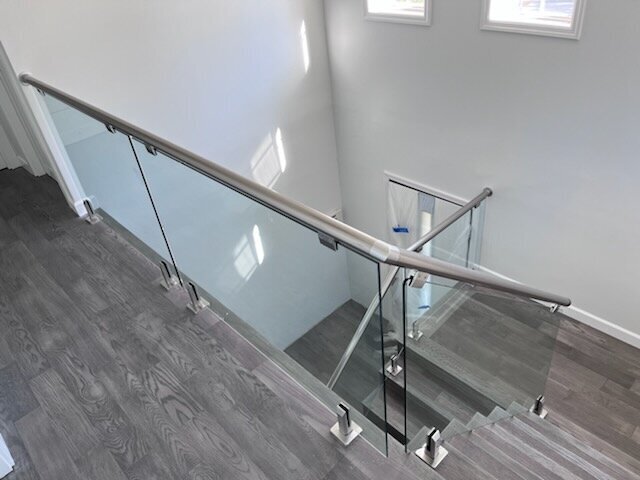
Tempered glass railings mount directly to posts without visible hardware, creating an unbroken barrier. Available in clear or tinted options, these systems work for any size pet. Quality installations include reinforced base channels that prevent small animals from digging or squeezing underneath.
Vertical Aluminum Systems You Can Customize by Size
Adjustable baluster spacing can match your pet's measurements. Black aluminum and wood-look finishes complement different architectural styles while maintaining the structural integrity large dogs require. Each baluster should anchor independently for maximum strength.
Fascia-Mount Systems That Eliminate the Gap Below
These systems attach to a deck's outer rim, eliminating the dangerous gap between bottom rail and deck surface. This design works well for homes with small dogs or puppies who try to squeeze through any opening they find.
Quality systems meet local building codes while exceeding standard spacing requirements for enhanced pet protection. Materials rated for coastal installation address both environmental stress and pet-related wear.
Common Questions About Cat Safe Balcony Railing
Types of Pet-Friendly Railing Systems

Matching Safety with Home Design
Modern homes embrace clean lines and open designs. Pet-safe railings should complement your architecture rather than clash with it.
Glass systems blend seamlessly with contemporary aesthetics while providing maximum protection. Aluminum railings in black or wood-look finishes suit various architectural styles from coastal modern to Mediterranean.
Custom powder coating allows you to match existing trim colors while maintaining the durability pets need.
Maintenance for Long-Term Safety
Regular inspections catch problems before they become dangerous. Check glass panels for chips or cracks monthly.
Examine aluminum balusters for loose connections or coating damage. Tighten hardware as needed to maintain structural integrity.
Clean railings regularly to remove salt buildup in coastal areas. Salt speeds up corrosion on metal components and can etch glass over time. Rinse with fresh water after storms or high winds to minimize salt exposure.

Additional Considerations for Pet-Safe Railings
A Safe Outdoor Space Starts With the Right Railing
A well-designed pet-friendly outdoor space means everyone enjoys your deck or balcony without worry. Pets stay secure while soaking up fresh air, and your home maintains its beauty with railings that combine function and design.
The right system protects your investment too. Durable materials resist pet damage, reducing repair and replacement costs. For coastal homes, this matters even more. Humidity, salt air, and year-round outdoor living demand railings built to withstand both environmental conditions and pet-related wear.
Planning starts with understanding your pet's behavior and your home's specific needs. Consider consulting with railing professionals who can assess your situation and recommend the right solution to keep everyone safe while enhancing your property's value.
We provide free estimates and service South Florida - Palm Beach County, Broward County and Miami-Dade County. All of our material is available & in stock making, turnaround time currently at 2-3 weeks (subject to change) for installations and for shipping orders within 5 business days in US & abroad.
Modern Railing Co has top quality material, industry experience, dedication to service, make us different than others. We will deliver your expectations!
Modern Railing Co's aluminum railing & glass railing systems are available in various styles to complement residential and commercial settings. Main features include:
* Strong and durable construction (weatherproof)
*3/8 & 1/2 inch Tempered Glass
*9/16, 11/16 and 13/16 Laminated Tempered Glass
* Extremely long service life
* Unique finish (anodizing) which fulfills high quality standards (doesn't rust or corrode).
* High resistance to UV radiation (doesn't flake or crack)
* Flexible designs
* Easy maintenance
* All items are in stock
Request a Quote
South Florida GLass & Aluminum Railings
Check out our reviews on Google
About US
(561)672-0717
info@modernrailingco.com
980 North Federal Highway Suite 110
Boca Raton, FL 33432
Shipping Available in the US & Installation in South FLorida.
Contact Us