Call For estimate
Glass Railings
Black Aluminum Railings
Dark & Light Wood Railings
Aluminum Railings
Call (561)672-0717

Knee Wall Railings
Fascia Mount Railings
Indoor Stair & Surface Mount Railings
Outdoor Stair & Surface Mount Railings
Handrails
Standoff-Pins Glass Railing Systems
Glass Railing Post Systems

What Happens If Your Railing Fails a Florida Building Inspection?
Building inspections are stressful on their own. Add a railing into the mix and the stakes go up fast, because in Florida, railings are treated as life-safety components. Inspectors take them seriously, local building departments enforce the rules aggressively, and the consequences of a failed railing inspection can range from project delays to fines and legal exposure.
This guide walks through what a railing inspection in Florida looks like, what triggers one, what happens when things go wrong, and how to get ahead of the process before it becomes a problem.
What Does a Railing Inspector Actually Look For?
Inspectors evaluate the railing against the Florida Building Code for height, structural integrity, baluster spacing, anchoring, and visible signs of deterioration. Every measurement and connection point is fair game.
Here is what gets checked during a typical railing building inspection in Florida.
Height and Spacing Requirements
Handrail height on stairs must fall between 34 and 38 inches, measured vertically from the stair nosing to the top of the rail. Guards on balconies, landings, and other level surfaces need to be at least 36 inches high for residential properties and 42 inches for commercial buildings. Balusters and infill panels are measured too. If a 4-inch sphere can pass through any gap, the railing fails.
Structural Stability and Anchoring
Inspectors grab the top rail and push on it. If there is any wobble, movement, or deflection, the railing has a problem. They also look at how the posts connect to the structure. Loose anchors, undersized fasteners, and missing blocking behind wall-mounted railings are some of the most common reasons a railing fails inspection in Florida.
Corrosion and Material Condition
Florida's coastal humidity and salt air accelerate metal deterioration faster than almost anywhere else in the country. Inspectors look for rust bleed-through on steel, white pitting on aluminum, cracked welds, concrete spalling around embedded posts, and any coating failure that exposes raw metal. A railing that looks fine from a distance can still fail once an inspector gets up close.
Railing inspections are triggered by new construction permits, renovation permits, certificate of occupancy applications, milestone structural inspections for older buildings, and complaint-based or post-incident reviews.
New Construction and Permitted Renovations
Any project that requires a building permit and includes new stairs, balconies, ramps, landings, or replacement of existing guardrails or handrails will need to pass a railing inspection before the permit can be closed out. This applies to residential and commercial work alike.
Certificate of Occupancy
Before a building can be legally occupied, all life-safety systems have to meet code, and railings are on that list. For new residential construction, a railing that does not pass inspection will hold up the Certificate of Occupancy and delay the entire project.
Florida Milestone Inspections for Condos and Multi-Family Buildings
Florida's milestone inspection requirements have changed the game for older condo and multi-family buildings. Following the Champlain Towers South collapse in Surfside in 2021, the state passed SB 4D in 2022 and later updated the law with HB 913, effective July 1, 2025. Buildings that are 30 years old or older now face mandatory structural inspections, and balcony railings are frequently among the first items flagged.
Palm Beach County and Broward County have been especially active in enforcing these Florida milestone inspection requirements for railings, guardrails, and connection points on aging structures. Corrosion, loose anchors, and non-compliant heights show up on deficiency reports regularly.
Post-Incident and Complaint-Based Inspections
A fall, an injury, an insurance claim, or a tenant complaint about a wobbly railing can all trigger a railing inspection. In these situations, inspectors are looking for immediate safety hazards and may red-tag the railing on the spot if it poses a risk to occupants.
When Are Railing Inspections Required in Florida?

What Happens Immediately After a Railing Fails Inspection?
The inspector issues a correction notice or failed inspection report that lists every deficiency. Work on the project may be halted until the problems are fixed and a re-inspection is scheduled and passed.
The process usually looks like this. The inspector documents each failure point in a written report, noting the specific code section that was violated. The property owner or contractor then has to address every item on the list. A re-inspection fee is typically required, and the clock starts ticking on a correction timeline.
For new construction, a failed railing inspection means the Certificate of Occupancy cannot be issued. For existing buildings under a milestone inspection, the deficiency gets added to the structural report and must be remediated within the timeframe set by the local building department. Railing code violations in Florida are not items that can sit on a to-do list indefinitely.
How to Pass a Railing Inspection the First Time
The most reliable path is working with a licensed and insured railing contractor who pulls the required permits and installs to Florida Building Code specifications from the start.
A licensed contractor takes responsibility for code compliance and will typically handle the entire permit and inspection process. That includes pulling the permit, scheduling the inspection, and being present when the inspector arrives. This matters because unpermitted railing work is one of the most common reasons for inspection failure, and it creates a liability issue that follows the property long after the project is done.
If you are dealing with an older railing that needs to meet current code for a milestone inspection, a contractor experienced with railing repair and replacement can evaluate the existing system and recommend the right approach. Sometimes a targeted repair is enough. Other times, a full replacement with hurricane-resistant railings or ADA-compliant handrails is the smarter long-term investment.
Before the inspection, review the approved permit drawings, verify heights and spacing with a tape measure, check every anchor point for tightness and corrosion, and confirm that no modifications have been made outside the scope of the permit.

Ignoring a failed inspection can result in escalating fines, a stop-work order, difficulty selling the property, and for condo associations, potential legal liability.
The escalation path is predictable. A correction notice becomes a notice of violation. A notice of violation turns into daily fines from the local building department. For properties with open permits, a stop-work order can shut down the entire project until the railing issues are resolved.
For condo associations operating under HB 913, failure to address structural deficiencies, including railings, can result in the building being deemed unsafe for occupancy. The Surfside collapse made Florida legislators very clear about the consequences of deferred maintenance on aging structural components. Condo boards that delay on flagged railing deficiencies are taking on significant legal and financial risk.
Selling a home with open code violations or unpermitted railing work creates its own set of problems. Title searches flag open permits, and buyers or their lenders may refuse to close until everything is resolved.
What Are the Consequences of Ignoring a Failed Railing Inspection?
A failed railing inspection is not the end of the world. It is a solvable problem with a clear path forward. The key is to act on it quickly, work with a qualified professional, and avoid letting correction notices pile up.
In Florida's current regulatory environment, with stricter milestone inspection laws, more active enforcement from county building departments, and heightened awareness after Surfside, staying ahead of railing inspection requirements is the smartest and safest approach for any property owner.
A Failed Railing Inspection Is a Fixable Problem
We provide free estimates and service South Florida - Palm Beach County, Broward County and Miami-Dade County. All of our material is available & in stock making, turnaround time currently at 2-3 weeks (subject to change) for installations and for shipping orders within 5 business days in US & abroad.
Modern Railing Co has top quality material, industry experience, dedication to service, make us different than others. We will deliver your expectations!
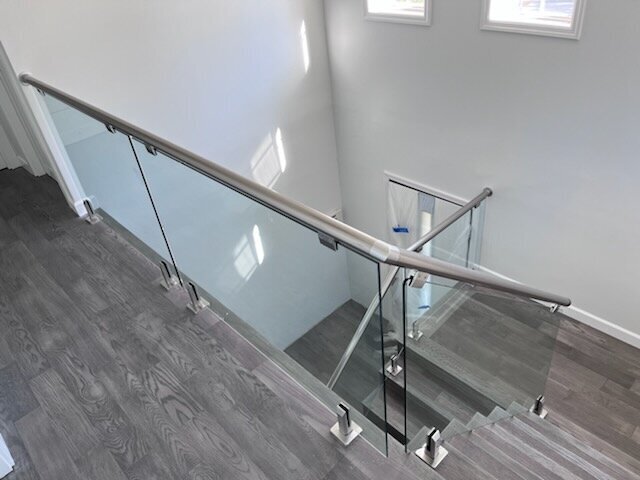
Modern Railing Co's aluminum railing & glass railing systems are available in various styles to complement residential and commercial settings. Main features include:
* Strong and durable construction (weatherproof)
*3/8 & 1/2 inch Tempered Glass
*9/16, 11/16 and 13/16 Laminated Tempered Glass
* Extremely long service life
* Unique finish (anodizing) which fulfills high quality standards (doesn't rust or corrode).
* High resistance to UV radiation (doesn't flake or crack)
* Flexible designs
* Easy maintenance
* All items are in stock
Request a Quote
South Florida GLass & Aluminum Railings
Check out our reviews on Google
About US
(561)672-0717
info@modernrailingco.com
980 North Federal Highway Suite 110
Boca Raton, FL 33432
Shipping Available in the US & Installation in South FLorida.
Contact Us