Call For estimate
Glass Railings
Black Aluminum Railings
Dark & Light Wood Railings
Aluminum Railings
Call (561)672-0717

Knee Wall Railings
Fascia Mount Railings
Indoor Stair & Surface Mount Railings
Outdoor Stair & Surface Mount Railings
Handrails
Standoff-Pins Glass Railing Systems
Glass Railing Post Systems

How Wind Load Requirements Affect Railing Design in Coastal Florida
If you are planning a railing for a balcony, rooftop terrace, or pool deck along the South Florida coast, you have probably run into a set of engineering rules that do not apply to homes further inland. A railing that passes inspection in Orlando can fail outright in Pompano Beach, and the reason comes down to wind.
Wind load requirements are the structural standards in the Florida Building Code that set how much sideways wind pressure a railing must resist before it bends, loosens, or fails during a hurricane.
Along the coast, those numbers climb fast, and they shape the glass thickness, post spacing, and anchoring that an engineer will sign off on. Understanding the basics helps you read a quote, ask sharper questions, and avoid a system that looks fine on paper but will not survive a storm.
What Are Wind Load Requirements for Florida Railings?
A wind load requirement is the calculated lateral force, measured in pounds per square foot, that a railing assembly has to withstand based on its location, height, and surrounding terrain. For railings, the code treats the system as part of a building's exterior, so it carries the same forces that act on walls and balconies.
These calculations follow ASCE 7, the national standard the Florida Building Code adopts for structural design. Chapter 16 of the code, covering structural design, points engineers toward ASCE 7 wind load calculations for Florida balconies and other exposed elements. The result is a design pressure that shifts from one property to the next, which is why no two coastal railing projects use the exact same specification.
Why Does Building Height Change the Wind Pressure on Your Balcony?
What Makes the High-Velocity Hurricane Zone Different in Broward County?
How Wind Loads Shape Glass Thickness and Post Spacing
Higher design pressures force thicker glass, tighter post spacing, and deeper concrete anchors, because each of those choices adds resistance to the lateral force pushing on the railing. A solid glass panel catches the full force of the wind like a sail, so the laminated glass has to be thick enough not to flex or shatter under it.
Florida building code exterior glass railing wind pressure ratings also decide how far apart the posts can sit. Closer posts shorten the unsupported span of each panel and spread the load across more anchor points. Those anchors then need enough embedment into structural concrete to resist being pulled loose, which is where a lot of underbuilt railings give way first.
Do Cable Railings Perform Better in High Winds?
Yes, cable railings usually carry a lower wind load than solid glass because their open design lets air flow through instead of pushing against a flat surface. Less area facing the wind means less pressure transferred into the posts and anchors.
That advantage comes with trade-offs. Cable systems need high tension to stay code-compliant and resist sagging, and the stainless cable has to be rated for salt exposure so it does not corrode near the water. Glass still wins for unobstructed views and wind-driven rain protection, so the better fit depends on the property's elevation, exposure, and how the owner plans to use the space.
These distinctions feed straight into the hurricane resistant balcony railing specifications an engineer writes for a coastal job. The model you choose changes the load the structure has to carry, so the decision is structural as much as it is about looks.
Getting the Wind Load Right Before You Build
Any coastal railing on a balcony, rooftop, or elevated deck should be designed to a calculated wind load, not a generic number pulled from a catalog. A licensed engineer or an experienced installer can run the ASCE 7 wind load calculations for Florida balconies tied to your exact address, height, and exposure category.
Getting that math right early saves the cost of a failed inspection or a redesign down the line, and it gives you a railing that holds the next time a named storm moves through. For a coastal property, that engineering is the difference between a railing that looks finished and one that is built for the wind it will face.
Broward and Miami-Dade counties are inside Florida’s High-Velocity Hurricane Zone, or HVHZ. That means railing systems face stricter code requirements than they would in many other parts of the state. Pompano Beach falls within this zone, so wind load, product approval, and anchoring details matter from the start.
For a railing to pass in the coastal Florida HVHZ, the system needs approved components, hardware rated for the local design pressure, and anchors tested for hurricane-force wind conditions. On this part of the coast, wind speeds can reach 170 mph or higher depending on the building type. That is why coastal railing work in Pompano Beach often needs more engineering than a similar project farther inland.
Wind moves faster the higher you go, so a railing on an upper floor has to resist far more pressure than the same railing at ground level. Friction with the ground, trees, and nearby buildings slows wind near the surface, and that drag fades with elevation.
How Ground-Level and High-Rise Forces Compare
A balcony railing on the tenth floor of an oceanfront condo can face wind pressure close to double what a ground-floor patio railing sees on the same building. Engineers account for this with a height factor that scales the design pressure upward floor by floor.
A builder cannot reuse one railing detail across an entire tower. The lower units may work with standard post spacing, while upper-floor balcony railing systems need thicker glass, closer posts, or heavier anchors to handle the added load. The same logic drives exposed rooftop railings on tall buildings, where nothing is left to block the wind at all.
Which Railing Models Hold Up Best Against Coastal Wind?
The right model depends on how much wind the design pressure demands and how much view the owner wants to keep, since open systems shed wind while solid panels resist it head-on. Each common style handles coastal forces differently, and matching the model to the location matters more than picking the one that photographs best in a showroom.
We provide free estimates and service South Florida - Palm Beach County, Broward County and Miami-Dade County. All of our material is available & in stock making, turnaround time currently at 2-3 weeks (subject to change) for installations and for shipping orders within 5 business days in US & abroad.
Modern Railing Co has top quality material, industry experience, dedication to service, make us different than others. We will deliver your expectations!
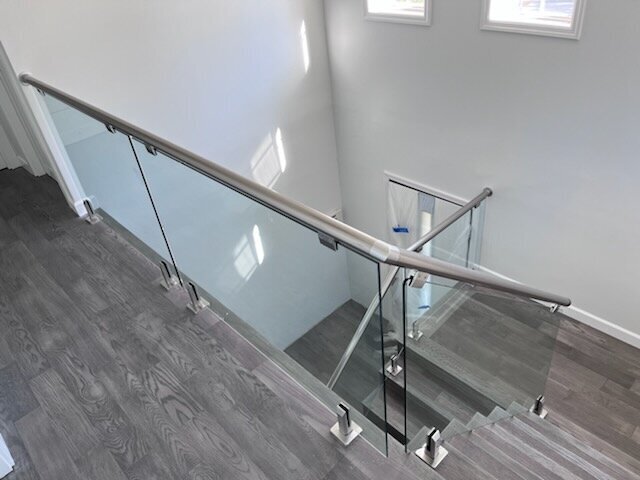
Modern Railing Co's aluminum railing & glass railing systems are available in various styles to complement residential and commercial settings. Main features include:
* Strong and durable construction (weatherproof)
*3/8 & 1/2 inch Tempered Glass
*9/16, 11/16 and 13/16 Laminated Tempered Glass
* Extremely long service life
* Unique finish (anodizing) which fulfills high quality standards (doesn't rust or corrode).
* High resistance to UV radiation (doesn't flake or crack)
* Flexible designs
* Easy maintenance
* All items are in stock
Request a Quote
South Florida GLass & Aluminum Railings
Check out our reviews on Google
About US
(561)672-0717
info@modernrailingco.com
980 North Federal Highway Suite 110
Boca Raton, FL 33432
Shipping Available in the US & Installation in South FLorida.
Contact Us