Call For estimate
Glass Railings
Black Aluminum Railings
Dark & Light Wood Railings
Aluminum Railings
Call (561)672-0717

Knee Wall Railings
Fascia Mount Railings
Indoor Stair & Surface Mount Railings
Outdoor Stair & Surface Mount Railings
Handrails
Standoff-Pins Glass Railing Systems
Glass Railing Post Systems

Frameless Glass vs Cable Railing, Which Is Better for Waterfront Views?
If your home looks out over the Intracoastal, a canal, or the open Atlantic, the railing you pick decides how much of that water you get to see.
Most homeowners narrow it down to two modern systems and then get stuck. This is a frameless glass railing vs cable railing comparison built around the pros and cons that matter on the water, so you can match the system to your property.
Which Railing Is Better for a Pompano Beach Waterfront Home?
The decision usually comes down to how much cleaning you are willing to do. Frameless glass gives you an almost invisible barrier with nothing crossing the view, but it shows salt film and needs washing often. Stainless steel cable asks for far less upkeep and lets breeze pass through, though the thin horizontal lines do sit across your sightline.
For owners along the Pompano Beach waterfront, that trade is the whole conversation. Glass leans toward a flawless look that takes work to keep, while cable leans toward easy ownership with a slightly busier view. Neither is the wrong answer. The right one depends on your tolerance for a hose and a squeegee, your budget, and how exposed your property is to wind and salt.
What Does Maintenance Look Like in a Salt Air Environment?
How Do Glass and Cable Compare for an Unobstructed Ocean View?
How Do Both Systems Handle Wind Load and Hurricane Season?
Cable railings usually handle wind more easily because air passes through the system. Glass railings are different. A solid panel catches more wind, so the posts, mounts, glass thickness, and anchors have to be rated for that added pressure.
That does not mean glass is a poor choice. It just means there is less room for shortcuts, especially on exposed waterfront properties. Frameless glass can be built for coastal wind conditions, but the system needs the right engineering behind it.
Cable puts less wind stress on the structure because of its open design. Glass gives you the clearest view, but it requires heavier hardware and more precise installation. Both can work in hurricane-prone areas when they are properly specified, permitted, and installed.
Which Mounting Models Work Best on the Water?
The mounting style matters almost as much as the railing material. It affects the view, the hardware exposure, and how well the system handles salt air and wind.
For glass railings, the cleanest options are usually standoff pin mounts or base shoe systems. Standoff pins hold each panel with small, visible fittings, while base shoe systems secure the glass in a slim bottom channel. Both keep the view open, which is why many waterfront projects use frameless glass railing systems built for coastal exposure.
Post-supported glass adds more structure and can work better for longer runs, but it creates a slightly more framed look. Cable systems are more straightforward: stainless posts with horizontal cable runs tensioned between them. For exposed areas facing open water, marine grade stainless steel cable railing setups usually offer the best balance of airflow, strength, and easier upkeep.
Read together, the cost picture tracks the maintenance picture. You pay more for glass at the start and over the years to keep it spotless. You pay less for cable and spend fewer weekends maintaining it.
Both belong on any short list of modern coastal deck railing options, so the budget question is less about cheap versus expensive and more about where you want to spend, on the install or on the upkeep.
Which Option Adds More Value to a South Florida Home?
Both can add value, but they appeal to buyers in different ways. Frameless glass usually makes the stronger first impression on high-end waterfront homes because it keeps the view clear and photographs beautifully. Cable railing feels more minimal and practical, especially for buyers who want a modern look with less cleaning.
The better choice depends on how you use the home. If the view is the main feature and you do not mind occasional glass cleaning, frameless glass makes sense. If you want airflow, clean lines, and easier ownership, cable is a strong option.
Either way, value comes from choosing a system that fits the property, not just the style. On the water, the railing needs to be properly sized, mounted, and anchored for salt exposure, wind load, and everyday use.
For the cleanest possible sightline, frameless glass wins, since a clear tempered panel removes almost every visual interruption. Cable comes very close and reads nearly invisible from a few feet back, but up close the tensioned lines are still there.
This is where the two systems separate the most. A frameless panel acts like a sheet of air, which is part of why people searching for the best railing for an unobstructed ocean view in Florida tend to start with glass. The catch is that glass only stays invisible while it is clean. Cable holds its low profile no matter the salt load, and the gaps between strands let light and air through in a way solid glass cannot. Cable also poses no hazard to birds along the shoreline, a small point that matters to waterfront owners.
Glass needs frequent washing to fight salt spray and water spotting, while cable mostly needs occasional re-tensioning and a wipe down. On the water, that difference shows up fast.
Anyone living near the ocean knows how quickly salt builds on a clear surface. A frameless glass panel facing the Atlantic can haze over within days, so keeping that signature look means a regular routine with a soft cloth and a squeegee. Cable skips most of that.
There is no broad surface for salt to film across, so the upkeep shifts to checking tension and rinsing the hardware. If your priority in the cable railing vs glass railing cost and maintenance question is fewer chores, cable carries the lighter load.
How Florida's Climate Affects 316L Stainless Steel Cables
316L marine grade stainless steel resists the chloride attack that South Florida salt air drives, which is why it is the standard for coastal cable systems. Lower grades like 304 can develop tea staining, a brown surface discoloration that appears in heavy salt exposure. The 316L alloy holds up far better, though even good stainless benefits from a periodic freshwater rinse to clear deposits before they settle in.
Cables also relax slightly over time and through temperature swings, so a light tensioning check once or twice a year keeps the runs taut and the look crisp.
What Is the Real Cost Difference Between Glass and Cable?
Frameless glass generally costs more to install and more to maintain, while cable is usually lighter on both the upfront price and the long run upkeep. The numbers below give a working range rather than a fixed quote, since linear footage, mounting surface, and hardware grade all move the final figure.
We provide free estimates and service South Florida - Palm Beach County, Broward County and Miami-Dade County. All of our material is available & in stock making, turnaround time currently at 2-3 weeks (subject to change) for installations and for shipping orders within 5 business days in US & abroad.
Modern Railing Co has top quality material, industry experience, dedication to service, make us different than others. We will deliver your expectations!
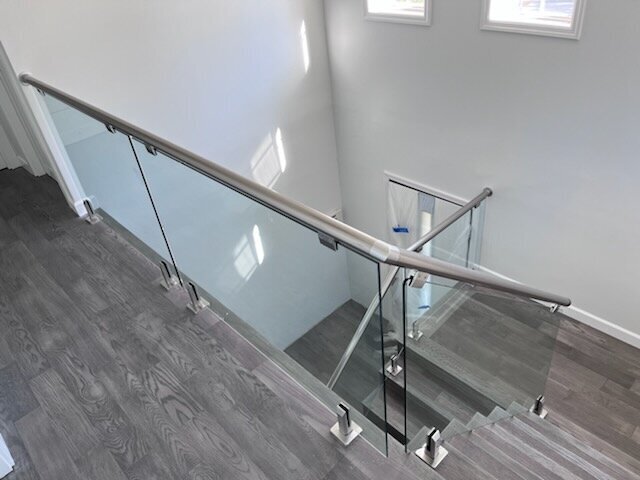
Modern Railing Co's aluminum railing & glass railing systems are available in various styles to complement residential and commercial settings. Main features include:
* Strong and durable construction (weatherproof)
*3/8 & 1/2 inch Tempered Glass
*9/16, 11/16 and 13/16 Laminated Tempered Glass
* Extremely long service life
* Unique finish (anodizing) which fulfills high quality standards (doesn't rust or corrode).
* High resistance to UV radiation (doesn't flake or crack)
* Flexible designs
* Easy maintenance
* All items are in stock
Request a Quote
South Florida GLass & Aluminum Railings
Check out our reviews on Google
About US
(561)672-0717
info@modernrailingco.com
980 North Federal Highway Suite 110
Boca Raton, FL 33432
Shipping Available in the US & Installation in South FLorida.
Contact Us