Call For estimate
Glass Railings
Black Aluminum Railings
Dark & Light Wood Railings
Aluminum Railings
Call (561)672-0717

Knee Wall Railings
Fascia Mount Railings
Indoor Stair & Surface Mount Railings
Outdoor Stair & Surface Mount Railings
Handrails
Standoff-Pins Glass Railing Systems
Glass Railing Post Systems

What Railing Materials Hold Up Best on Pompano Beach's Intracoastal?
A new railing looks great for about a year on the water. Then the salt shows up. If you live along the Intracoastal in Pompano Beach, you have seen what follows, the chalky finish, the rust freckles, the streaks no cleaner fully lifts. So the real question is which material skips that fate.
For most homes, the best railing material for salt air coastal Florida is powder-coated aluminum, with marine-grade 316L stainless steel and laminated glass close behind where you need extra strength or a clear view.
Pompano Beach is a harder test than most coastal towns. Your home takes salt from the Atlantic on one side and the waterway on the other, plus humidity, hard sun, and hurricane-level wind. Choose the wrong material and all four go after it at once.
Why Do Standard Railing Materials Fail So Fast Near the Coast?
Salt, humidity, and UV wear down ordinary metals and paint in months, not years. Salt traps moisture against the surface, which feeds rust on untreated steel and iron. The sun does the rest, fading and peeling cheaper finishes before the metal itself gives out.
Location makes it worse here. Salt drifts inland from both the ocean and the waterway, so even canal-front lots that feel protected are not. The area is also a High-Velocity Hurricane Zone, so a railing has to pass wind-load rules on top of resisting salt. A finish that survives in Orlando can fail an inspection on the coast.
Marine-Grade 316L vs Standard 304 Stainless Steel
Is Powder-Coated Aluminum the Right Call for Most Waterfront Homes?
Do Laminated Glass Railings Survive the Salt and Sun?
Yes. Glass does not corrode, so laminated glass railings last well as long as the hardware is marine-grade. They also give you the open sightlines that make a waterfront lot worth the money, with nothing between you and the water.
Laminated glass can also be designed to handle strong wind conditions, which matters in South Florida hurricane zones. If the view is the main reason for the project, frameless glass railing options for waterfront homes are worth comparing before you choose the final hardware and layout.
What About Cable Railings on the Water?
Cable railings keep the view open and can hold up near saltwater, as long as the cable, posts, and fittings are marine-grade 316L stainless steel and kept under proper tension.
They deliver a low-profile look for less than full glass, and the thin lines nearly disappear against the water.
The catch is upkeep. Cable needs occasional re-tensioning, and stainless steel still needs basic cleaning to limit tea staining in coastal air. On lots facing heavy spray, marine-grade hardware can make the difference between a system that ages well and one that starts streaking early.
If you like the open look, it is worth comparing cable railing systems built for coastal exposure with glass railing before making the final call. Cable can feel lighter and more minimal, while glass gives you the clearest view with less routine adjustment.

A sheltered canal home can lean on aluminum and rarely think about it. A house taking direct ocean spray may earn back the cost of 316L or glass in saved hassle over twenty years. Your spot on the map counts as much as the material.
How the Materials Compare at a Glance

So Which Railing Material Lasts Longest in Pompano Beach?
With marine-grade materials and basic care, aluminum, 316L stainless steel, laminated glass, and cable railing can all last for decades in coastal Florida. Powder-coated aluminum and marine-grade 316L stainless steel are usually the safest long-term choices.
What railing lasts longest near ocean Florida depends on the material grade and the amount of salt exposure around your home. A railing set back from direct spray has an easier life than one facing open water every day.
Before choosing a material, it is worth comparing railing installations across Pompano Beach by exposure level, view goals, hardware type, and how much upkeep you want over time.
For most waterfront homes, powder-coated aluminum gives the best balance of corrosion resistance, low upkeep, and cost. Aluminum does not rust like steel. It builds a thin oxide layer that protects the metal, and the powder coat adds a second shield against salt and sun.
The coating is what carries it. A baked-on finish resists chipping and fading far better than paint, and it keeps salt off the aluminum underneath. Care stays light, a fresh-water rinse and a mild soap wash a few times a year. As a corrosion resistant deck railing South Florida homeowners can mostly forget about, aluminum is hard to beat.
Use marine-grade 316L, not standard 304, for any stainless near the ocean. The difference is one element, molybdenum. 316L has it and 304 does not, and that is what lets 316L resist the chloride attack salt air brings. The two look identical at first. Within a season on the water, 304 starts spotting with rust.
This is the aluminum vs stainless steel railing coastal home question in miniature. Stainless brings more strength and a bright, modern edge that suits cable infills and slim posts. It costs more and wants a bit more attention.
If you are comparing options, looking at marine-grade stainless steel railing systems can help you see where stainless earns the higher price and where powder-coated aluminum may still be the smarter choice.
How Do You Stop Tea Staining on Stainless Railings?
Tea staining is the light brown film stainless picks up near salt water, and a smoother finish plus regular rinsing keeps it off. It is cosmetic, not structural, so it will not weaken the railing. It only reads as neglect.
Two habits prevent it. Pick a finer, electropolished surface, since rough finishes hold salt. Then rinse with fresh water every few weeks through the dry, windy stretch. Homes right on the water need it more often than canal lots set further back.
Aluminum wins on value and low care, 316L on strength, glass on views, and cable falls between glass and stainless. The table weighs the trade-offs that matter most on a salt-exposed lot.
We provide free estimates and service South Florida - Palm Beach County, Broward County and Miami-Dade County. All of our material is available & in stock making, turnaround time currently at 2-3 weeks (subject to change) for installations and for shipping orders within 5 business days in US & abroad.
Modern Railing Co has top quality material, industry experience, dedication to service, make us different than others. We will deliver your expectations!
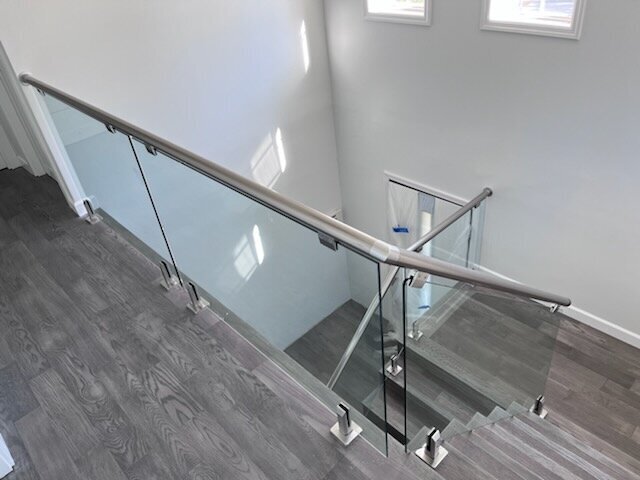
Modern Railing Co's aluminum railing & glass railing systems are available in various styles to complement residential and commercial settings. Main features include:
* Strong and durable construction (weatherproof)
*3/8 & 1/2 inch Tempered Glass
*9/16, 11/16 and 13/16 Laminated Tempered Glass
* Extremely long service life
* Unique finish (anodizing) which fulfills high quality standards (doesn't rust or corrode).
* High resistance to UV radiation (doesn't flake or crack)
* Flexible designs
* Easy maintenance
* All items are in stock
Request a Quote
South Florida GLass & Aluminum Railings
Check out our reviews on Google
About US
(561)672-0717
info@modernrailingco.com
980 North Federal Highway Suite 110
Boca Raton, FL 33432
Shipping Available in the US & Installation in South FLorida.
Contact Us