
Call For estimate
Glass Railings
Black Aluminum Railings
Dark & Light Wood Railings
Aluminum Railings
Call (561)672-0717

Knee Wall Railings
Fascia Mount Railings
Indoor Stair & Surface Mount Railings
Outdoor Stair & Surface Mount Railings
Handrails
Standoff-Pins Glass Railing Systems
Glass Railing Post Systems

What to Expect During a Railing Installation in a Pompano Beach Condo
Replacing or upgrading a balcony railing in a condo feels like it should be simple. You pick a design, a crew shows up, and the work gets done. In a Pompano Beach high-rise, the reality involves more moving parts, because the building controls almost as much of the process as you do.
The condo balcony railing installation process in Florida usually runs six to eight weeks from first inquiry to final inspection, and most of that time goes to approvals, custom fabrication, and building coordination rather than the physical install. The hands-on work on your balcony often takes only a few days, so knowing where the delays come from helps you plan around them instead of waiting in the dark.
Why is a condo railing project more involved than a single-family home?
A condo railing replacement carries more steps because the building, not only the owner, has authority over the work, the access, and the schedule. A homeowner with a detached house answers to the county permit office and little else. In a multi-unit tower, you also answer to an HOA board, building management, and neighbors who share walls, elevators, and hallways with your project.
That added layer is most noticeable in the older oceanfront and Intracoastal towers along the A1A corridor, where boards tend to guard the building's appearance and structural integrity closely. Your balcony railing is part of the building's exterior, so changes rarely stay a private decision.
What documents does building management need from a contractor?
How does HOA approval for a balcony railing replacement work?
How are elevator access and material delivery handled in a high-rise?
High rise balcony railing installation logistics center on reserving the service elevator, scheduling a loading area, and protecting shared spaces while glass panels and metal posts move through the building. Long glass sections and aluminum rails cannot ride a passenger elevator alongside residents, so crews coordinate a dedicated time slot with management.
Delivery windows are often limited to weekday business hours, and freight cannot block lobbies or garage entries. A crew familiar with Pompano Beach buildings will map this out in advance rather than improvising on install day.
What about noise rules and neighbor notifications?
Most condo associations restrict construction noise to set hours, commonly nine in the morning to four or five in the afternoon on weekdays, and many require advance notice to neighboring units. Drilling into concrete for railing anchors is loud, and a board that fields complaints can pause your project.
Giving adjacent residents a heads-up about the timeline keeps relationships civil and keeps management on your side. A considerate crew also masks off the work area to contain dust in shared hallways.
What happens on installation day and afterward?
The on-site work moves through removing the old railing, securing new anchors into the slab or fascia, mounting the panels or posts, and clearing all debris before the crew leaves. In a condo, debris removal is its own task, since old glass and metal cannot be dropped in shared trash rooms and often need a scheduled haul-away.
Expect the crew to protect flooring and contain dust inside your unit and the hallway. Once the railing is set, a final inspection confirms the install meets Florida Building Code and any wind-load requirement that applies to balconies in this High-Velocity Hurricane Zone.
Glass and cable both keep sightlines open, which matters on a waterfront balcony, while aluminum and stainless trade some visibility for lower maintenance. The right pick depends on your exposure, your board's rules, and how the railing reads against the rest of the building.
How long does a condo balcony railing installation take?
The actual balcony railing installation usually takes two to four days. The full process takes longer, often around six to eight weeks, because approvals, permitting, measurements, and custom fabrication happen before installation starts.
The longest wait is usually fabrication. Glass panels, metal posts, brackets, and other parts have to be made to fit the balcony, not pulled off a shelf. That is why railing decisions should happen early in a renovation, not at the end.
For condo owners comparing balcony railing replacement on a coastal building, it helps to get the design, HOA paperwork, and permit details moving first. Railing installation in Pompano Beach buildings often follows the same basic rhythm: approval first, fabrication next, installation last.
HOA approval for a balcony railing replacement almost always requires submitting your proposed design to an architectural review board before any work begins. Most South Florida luxury buildings keep written rules about exterior finishes, glass tint, post spacing, and color, and a railing that breaks from the established look will be sent back for revision.
Plan to provide drawings, material samples, and the contractor's details for review. Some boards meet only once a month, so a single missed deadline can push your start date by weeks. Reading the condo renovation rules common across South Florida buildings early saves you from designing something the board will reject. The rules in one Pompano tower may have little in common with the one next door.
Building management will ask for the contractor's active license, general liability insurance, and workers' compensation coverage before allowing any crew on site. This protects the association if a worker is injured or if shared property is damaged during the project.
Many associations also require a certificate of insurance that names the building as an additional insured. A licensed and insured railing contractor handles these requests routinely, so a company that hesitates or cannot produce current paperwork is a warning sign worth taking seriously.
Which railing models hold up best on a Pompano Beach balcony?
The railing systems that perform longest on coastal high-rise balconies are marine-grade aluminum, laminated or tempered glass with corrosion-resistant hardware, and 316L stainless steel, because each one stands up to the salt air and wind load that define this stretch of coast. Standard steel and budget hardware corrode fast this close to the water.
Here is how the common options compare for a balcony facing the Atlantic or the Intracoastal.
We provide free estimates and service South Florida - Palm Beach County, Broward County and Miami-Dade County. All of our material is available & in stock making, turnaround time currently at 2-3 weeks (subject to change) for installations and for shipping orders within 5 business days in US & abroad.
Modern Railing Co has top quality material, industry experience, dedication to service, make us different than others. We will deliver your expectations!
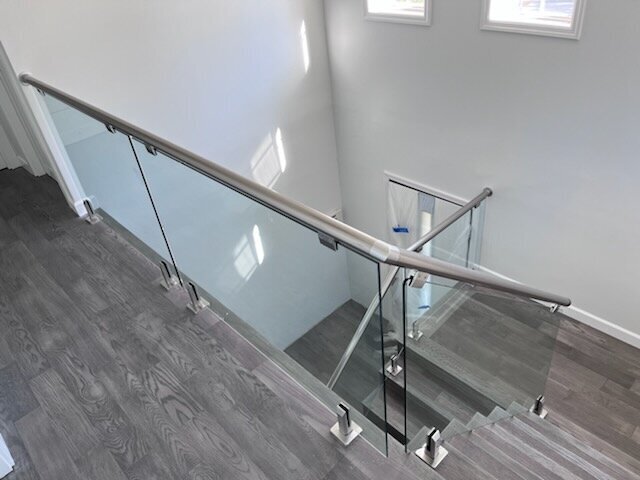
Modern Railing Co's aluminum railing & glass railing systems are available in various styles to complement residential and commercial settings. Main features include:
* Strong and durable construction (weatherproof)
*3/8 & 1/2 inch Tempered Glass
*9/16, 11/16 and 13/16 Laminated Tempered Glass
* Extremely long service life
* Unique finish (anodizing) which fulfills high quality standards (doesn't rust or corrode).
* High resistance to UV radiation (doesn't flake or crack)
* Flexible designs
* Easy maintenance
* All items are in stock
Request a Quote
South Florida GLass & Aluminum Railings
Check out our reviews on Google
About US
(561)672-0717
info@modernrailingco.com
980 North Federal Highway Suite 110
Boca Raton, FL 33432
Shipping Available in the US & Installation in South FLorida.
Contact Us