
Call For estimate
Glass Railings
Black Aluminum Railings
Dark & Light Wood Railings
Aluminum Railings
Call (561)672-0717

Knee Wall Railings
Fascia Mount Railings
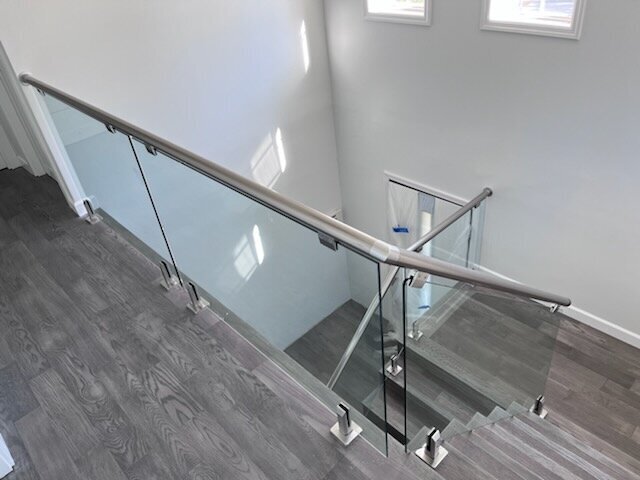
Indoor Stair & Surface Mount Railings
Outdoor Stair & Surface Mount Railings
Handrails
Standoff-Pins Glass Railing Systems
Glass Railing Post Systems

Outdoor Stair Railing Requirements in Florida: 3 Code Rules You Need to Know
If you have outdoor stairs at your South Florida home, the railing does more than look nice. It needs to meet specific safety standards that protect everyone who uses those stairs. Florida's building code sets these standards, and knowing them helps you avoid both accidents and violations.
Let's break down the three most important safety features your outdoor stair railing must have.
Height and Grip Requirements for Exterior Stair Handrails
The Right Height for Outdoor Handrails
Handrails need to sit between 34 and 38 inches above each step. This range works because your hand lands on the rail naturally without reaching or bending. The measurement starts at the front edge of each step and goes straight up to the top of the rail.
The height should stay consistent all the way up. Variations throw off your balance and make the rail less helpful when you need it.
Florida Code on Handrail Diameter and Grip
Florida's building code for exterior stairs also covers whether you can physically grip the rail. Round rails need a diameter between 1¼ and 2 inches. Non-round profiles should have a perimeter between 4 and 6¼ inches.
This matters because your hand needs to wrap around the rail. Oversized decorative rails look nice but become useless if you can't grab them when you slip. Someone who trips has maybe a second to catch themselves.
If you're thinking about new outdoor stair or surface mount railing, these spacing requirements affect your design from the start. Uneven spacing at corners creates gaps that won't pass inspection.
Handrail Extension Requirements Under Florida Building Code
People who handle professional handrail installation build these extensions into the original plan. Adding them later costs more and might require structural work.
Safety Railings for Outside Steps: Spacing and Height Rules
Does This Apply to Your Property?
These requirements cover residential properties in Florida. Single-family homes, duplexes, and small apartment buildings all fall under these standards.
Commercial buildings follow stricter rules under the Americans with Disabilities Act. Those properties need additional specifications for mounting heights, extensions, and clearances.
Cities and counties can layer on their own requirements too.
Miami-Dade and Palm Beach County sometimes have specific permitting rules or extra standards. Check with your local building department before starting any work.
Warning Signs Your Exterior Railing Needs Attention
Outdoor railings wear down over time. Aluminum resists rust better than steel, but connections still loosen. Wood can rot from moisture. Catching problems early prevents bigger issues.
Watch for these red flags:
● The railing wobbles or moves when you push it
● Balusters have broken or show gaps
● You can fit more than 4 inches between posts
● The rail height feels off
If you spot any of these problems, look into railing repair or replacement options before someone gets hurt. Delaying creates real safety risks.

Installing outdoor stair railings requires accurate measurements, structural knowledge, and current code familiarity. Licensed contractors pull permits and handle inspections with your building department. They also know how to work with unusual setups like stairs connecting different deck levels or railings attaching to masonry walls.
Every property has quirks. Someone experienced recognizes which solutions work for specific situations and which ones create problems down the line.
Have questions about your specific setup or what the code requires? Check out common questions about railing requirements for more detailed answers.
The Value of Hiring a Code-Compliant Railing Installer

How to Check If Your Outdoor Stair Railing Meets Florida Code
These three safety features prevent real accidents. The height requirements, spacing rules, and extension standards come from decades of data about how people use stairs and what causes falls.
Your outdoor stairs see daily use. Kids run on them. Guests use them to enter your home. Family members depend on the handrails for support. People haul groceries and packages up and down them constantly.
Take a few minutes to check your current railing. Measure the handrail height from the step nosing. It should be between 34 and 38 inches. Check gaps between balusters. They need to be under 4 inches. Look for extensions at the top and bottom. Push on the rail to see if it wobbles.
If something doesn't meet the standards, you know what needs attention. The building code exists to keep people safe. Getting your railing right protects everyone who uses those stairs.
Handrails vs. Guardrails
People confuse these all the time. You hold handrails for balance. Guardrails stop you from falling off the sides. Florida's outdoor stair railing requirements call for guardrails at least 36 inches high on residential stairs, though 42 inches applies in many cases.
The barrier sits at roughly waist height to stop forward momentum before you tip over the edge.
The 4-Inch Rule for Balusters
Balusters are the vertical pieces between your top and bottom rails. Florida code limits gaps between them to 4 inches maximum. Inspectors test this with a 4-inch ball.
The reason is simple. A child's head can get trapped in larger gaps. Kids stick their heads through openings. The 4-inch limit prevents that from becoming a medical emergency.
The 12-Inch Extension Rule for Outdoor Handrails
Handrails can't just end at the first or last step. They extend at least 12 inches past the top riser. At the bottom, the rail slopes for one more step's depth past the final riser.
A lot of falls happen during the transition from stairs to level ground. Your body shifts from stepping to walking, and you need something to hold during that change.
Why Handrail Ends Must Return to a Wall or Post
Extensions need to return to a wall, post, or the ground instead of sticking straight out. This stops clothes and bags from catching on the end. A snagged sleeve can yank someone off balance.
It also removes the hazard of someone walking past and hitting their hip on a protruding rail.
We provide free estimates and service South Florida - Palm Beach County, Broward County and Miami-Dade County. All of our material is available & in stock making, turnaround time currently at 2-3 weeks (subject to change) for installations and for shipping orders within 5 business days in US & abroad.
Modern Railing Co has top quality material, industry experience, dedication to service, make us different than others. We will deliver your expectations!
Modern Railing Co's aluminum railing & glass railing systems are available in various styles to complement residential and commercial settings. Main features include:
* Strong and durable construction (weatherproof)
*3/8 & 1/2 inch Tempered Glass
*9/16, 11/16 and 13/16 Laminated Tempered Glass
* Extremely long service life
* Unique finish (anodizing) which fulfills high quality standards (doesn't rust or corrode).
* High resistance to UV radiation (doesn't flake or crack)
* Flexible designs
* Easy maintenance
* All items are in stock
Request a Quote
South Florida GLass & Aluminum Railings
Check out our reviews on Google
About US
(561)672-0717
info@modernrailingco.com
980 North Federal Highway Suite 110
Boca Raton, FL 33432
Shipping Available in the US & Installation in South FLorida.
Contact Us