

Stainless Steel Railing Installation in South Florida
Stainless steel railings provide a slim, durable system for stairs, balconies, decks, pool areas and commercial properties. They can be installed with cable, glass, bars or open handrail profiles depending on the location and how the space will be used.
A stainless steel railing can be added during new construction or used to replace an older metal, wood or aluminum system. Before installation, the supporting structure, mounting surface, exposure and surrounding finishes need to be reviewed.
The right system also depends on the environment. An interior stair may work well with Type 304 stainless steel, while an exterior coastal railing usually needs Type 316 or another grade selected for greater chloride resistance.

Why Choose a Stainless Steel Railing?
Stainless steel creates a clean railing line without the visual weight of heavier painted steel or wide aluminum profiles.
It works well where the design calls for:
- Slim posts and handrails
- Cable or glass infill
- A brushed or polished metal finish
- Strong outdoor hardware
- Coordinated interior and exterior details
- A railing that does not need repainting
Stainless steel is corrosion resistant, but it is not maintenance free or completely immune to staining. The grade, finish, fabrication and cleaning routine all affect how it performs in South Florida.
Can Stainless Steel Railings Be Added to an Existing Property?
Yes. Stainless steel railings can usually be installed on an existing stair, balcony, deck or landing if the supporting structure can hold the new anchors.
Concrete surfaces need enough sound material around each mounting point. Wood stairs and decks need solid framing or blocking below the posts. Stone and tile may require careful drilling so the finished surface does not crack.
The initial review should check:
- Existing railing and anchor locations
- Concrete cracks or spalling
- Wood framing below the finished surface
- Loose tile or stone
- Waterproofing near balcony anchors
- Stair and landing dimensions
- Areas that may need patching after removal
If the old system has widespread corrosion or loose anchors, a railing replacement review can help determine whether individual sections or the full run should be removed.
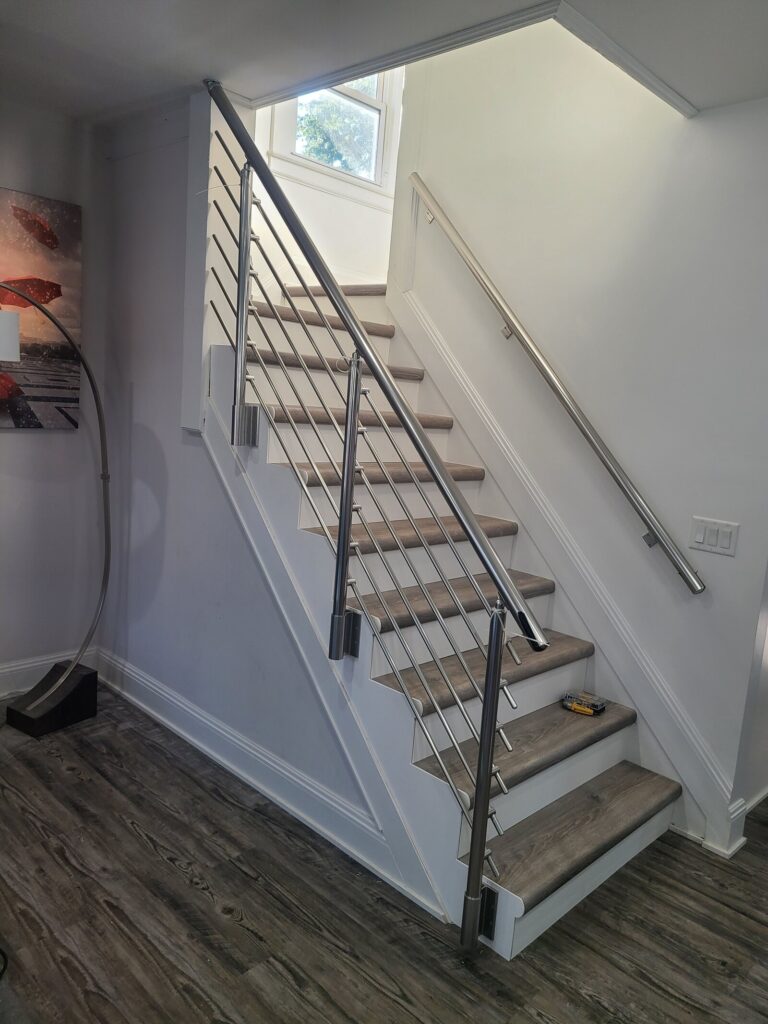
304 and 316 Stainless Steel Railings
Both grades are commonly used in architectural metalwork, but they are suited to different environments.
Type 316 contains molybdenum, which gives it greater resistance to chloride-related pitting than Type 304. It is commonly selected for coastal regions, but even 316 can stain or corrode in severe splash zones or where salt remains on the surface.
304 Stainless Steel
Type 304 is commonly used for interior stair railings, handrails and other dry areas with limited salt or chemical exposure.
It may also work in sheltered outdoor locations away from the coast, although the exposure and cleaning schedule should be considered before it is specified.
Using 304 on an oceanfront balcony or near a chlorinated pool may lead to more frequent staining and maintenance.
316 Stainless Steel
Type 316 is generally better suited to South Florida exterior railings because it provides stronger resistance to salt and chloride exposure.
Common applications include:
- Waterfront balconies
- Exterior stairs
- Pool decks
- Rooftop terraces
- Coastal walkways
- Outdoor commercial areas
- Glass railing hardware
Type 316 is not corrosion proof. Direct saltwater splash, sheltered areas that do not receive rain and surfaces where water collects may need more frequent cleaning or a more resistant alloy.
Choosing the Right Stainless Steel Railing System
The stainless grade is only one part of the railing. The infill, post spacing, finish, and mounting method also affect the appearance and performance.
Stainless Steel Cable Railings
Stainless steel cable railings use tensioned horizontal or vertical cables between posts.
Cable keeps the railing visually open and works well on decks, stairs, and balconies. The system needs properly spaced posts, secure end connections, and enough tension to control movement.
The layout must also meet the opening and load requirements that apply to the property. Cable should not be treated as a decorative wire added between standard posts.
Stainless Steel and Glass Railings
Stainless steel posts, top rails, and fittings can be combined with glass panels.
This creates a more open view than bars or pickets while retaining a visible metal frame. Stainless and glass railings are commonly used on stairs, balconies, pool decks, and commercial terraces.
The glass makeup, post spacing, and hardware depend on the application, panel size, and approved railing system.
Stainless Steel Picket and Bar Railings
Vertical stainless steel bars provide an open railing without the tensioning requirements of cable.
They work well on stairs, landings, walkways, and commercial properties where repeatable sections and straightforward maintenance are priorities.
Round bars create a softer profile, while square bars and flat members give the railing a more structured appearance.
Stainless Steel Handrails
A stainless steel handrail may be installed on a wall, incorporated into a guardrail or added beside outdoor steps.
Round profiles are often chosen for a comfortable grip. Square profiles may fit the surrounding design but still need to meet the graspability requirements for the stair or ramp.
Public and commercial routes may also require extensions, returns and clearances that should be included before fabrication. Matching accessible handrails can be used along ramps, stairs and adjoining walkways.
Stainless Steel Railing Mounting Options
The mounting method determines where the posts sit and which part of the structure carries the load.
Surface-Mounted Posts
Surface-mounted posts sit on top of the deck, landing or stair tread.
A base plate is anchored into the concrete, steel or wood framing beneath the finished surface. This is a common method for interior stairs, concrete landings and many exterior decks.
The base plate remains visible and uses some of the available walking surface.
Core-Drilled Posts
Core-drilled posts are installed into openings drilled into concrete.
The posts are aligned and secured with an appropriate anchoring system. This can create a cleaner appearance with less visible hardware around the base.
The slab depth, edge distance, cracks and possible utilities need to be reviewed before drilling.
Fascia-Mounted Systems
Fascia-mounted posts attach to the vertical side of a balcony, deck or stair structure.
This keeps more of the walking surface open and can create a slimmer railing line when viewed from above. A fascia-mounted railing requires a sound edge with enough depth and access for the anchors.
Exterior installations also need to account for waterproofing and drainage.
Wall-Mounted Handrails
Wall-mounted rails use brackets attached to structural framing or masonry.
The bracket positions need to provide enough clearance for a comfortable grip without placing the rail too far into the stair width. Drywall alone does not provide suitable support.
Stainless Steel Railings and Florida Requirements in 2026
As of July 2026, Florida continues to use the Eighth Edition of the Florida Building Code from 2023 while development of the Ninth Edition continues.
The complete railing must be designed around its location and use. Review may include:
- Guard height
- Handrail height and grip
- Opening limitations
- Post and infill spacing
- Structural loads
- Stair and landing dimensions
- Attachment to the supporting structure
- Wind exposure
- Permit or engineering requirements
The Florida Building Code addresses concentrated and linear loads for guards and handrails. Material strength alone does not confirm that the posts, cables, welds and anchors work together as an approved system.
Residential, condo and commercial properties may follow different review processes. The applicable requirements should be confirmed before fabrication begins.
Stainless Steel Railings on Concrete, Wood and Stone
Stainless steel can be installed on several surfaces, but the anchors need to reach the supporting structure rather than rely on the decorative finish alone.
Concrete
Concrete is well suited to surface-mounted and core-drilled posts when the slab is sound.
Cracks, old anchor holes, shallow edges and concrete repairs can affect the final post locations.
Wood
Wood decks and stairs need framing or blocking beneath each post.
Fastening only into deck boards or finished treads does not provide adequate structural support.
Stone and Tile
Stone, porcelain and tile require controlled drilling to avoid cracking.
The anchors need to pass through the finished material and connect to concrete, steel or wood framing below. The installer should also identify how old holes will be patched if an existing railing is removed.
Does Stainless Steel Rust Near the Ocean?
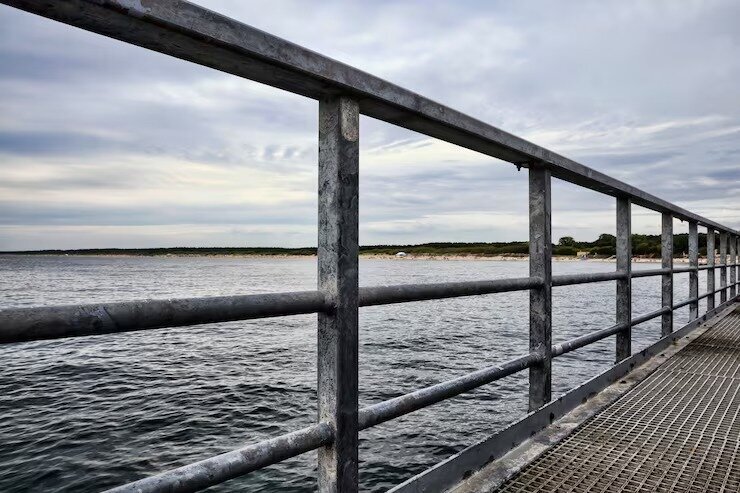
Stainless steel can develop rust-colored staining near the ocean, especially when the wrong grade is used or salt is allowed to collect.
Common causes include:
- Type 304 used in heavy coastal exposure
- Rough finishes that trap salt
- Water collecting around post bases
- Crevices around hardware
- Limited rain washing
- Chlorinated pool splash
- Carbon-steel contamination during fabrication
- Incompatible fasteners
Small orange or brown marks do not always mean the stainless railing is structurally failing. Tea staining often begins as a surface issue, but it should be cleaned and reviewed before pitting develops.
Rust spots on a new railing can also come from carbon-steel particles transferred by grinders, brushes or fabrication equipment. Dedicated tools and proper surface cleaning reduce this risk.
Will Stainless Steel Cable Railing Block the View?
Cable railing creates less visual obstruction than pickets or solid panels.
The posts, top rail and fittings remain visible, but the thin cable lines allow more of the surrounding view to remain open. Horizontal cables are generally more noticeable when viewed along the railing than when looking through it.
Cable does not block wind in the same way as glass, which can make it a practical option for decks and balconies where airflow matters.
Cleaning and Maintenance
Stainless steel should be rinsed and cleaned even when Type 316 is used.
For exterior South Florida railings:
- Rinse salt and pool residue with fresh water
- Use mild soap and a soft cloth
- Clean around post bases and fittings
- Dry polished surfaces when practical
- Remove early staining before it becomes heavier
- Check cables for movement or loss of tension
- Inspect anchors, welds and hardware
- Keep drainage clear around posts
Do not use carbon-steel wool or a brush previously used on ordinary steel. These tools can leave iron particles that later rust on the stainless surface.
Avoid muriatic acid near stainless railings. It contains chlorides and can damage stainless steel and surrounding metals. Coastal properties may need more frequent rinsing than sheltered inland installations.
Additional coastal corrosion protection may be needed where the railing receives direct salt spray or pool chemicals.
What Affects Stainless Steel Railing Cost in South Florida?
Stainless steel railing cost depends on more than the total length.
The main factors include:
- Type 304 or Type 316 stainless steel
- Cable, glass, bars or open handrail construction
- Number and size of posts
- Round, square, brushed or polished profiles
- Welded or mechanical fabrication
- Surface, core-drilled, or fascia mounting
- Stairs, corners and landings
- Custom bends and transitions
- Existing railing removal
- Concrete or flooring repairs
- Engineering and permits
- Property access
- Restricted working hours
A straight interior handrail in Type 304 is usually more straightforward than a welded Type 316 cable or glass system on an exposed balcony.
Search results show particular interest in cost per foot, but a per-foot figure can be misleading when it excludes corners, fittings, tensioning, removal or mounting preparation. A written scope provides a more useful comparison.
Stainless Steel Railings for Homes, Condos and Hotels
Residential projects may include interior stairs, balconies, decks, entry steps and pool areas.
Condo and HOA properties often require finish samples, drawings, resident notices and phased access before installation begins. High-rise projects may also require elevator scheduling and coordination with concrete or waterproofing work.
Hotels, restaurants and commercial properties may need stronger finishes, repeatable sections and installation planned around guests or daily operations. Larger commercial railing projects can include stainless steel across stairs, walkways, pool decks, rooftops and public areas.
Stainless steel can also be coordinated with stair railings, balcony railings, deck railings and pool handrails elsewhere on the property.
Stainless Steel Railing Installation Across South Florida
Stainless steel railing installation is available throughout Palm Beach County, Broward County, and Miami-Dade County.
Projects include interior stairs, balconies, decks, pool areas, walkways and commercial properties.
The installation is planned around the structure, stainless grade, coastal exposure and any building or association requirements.
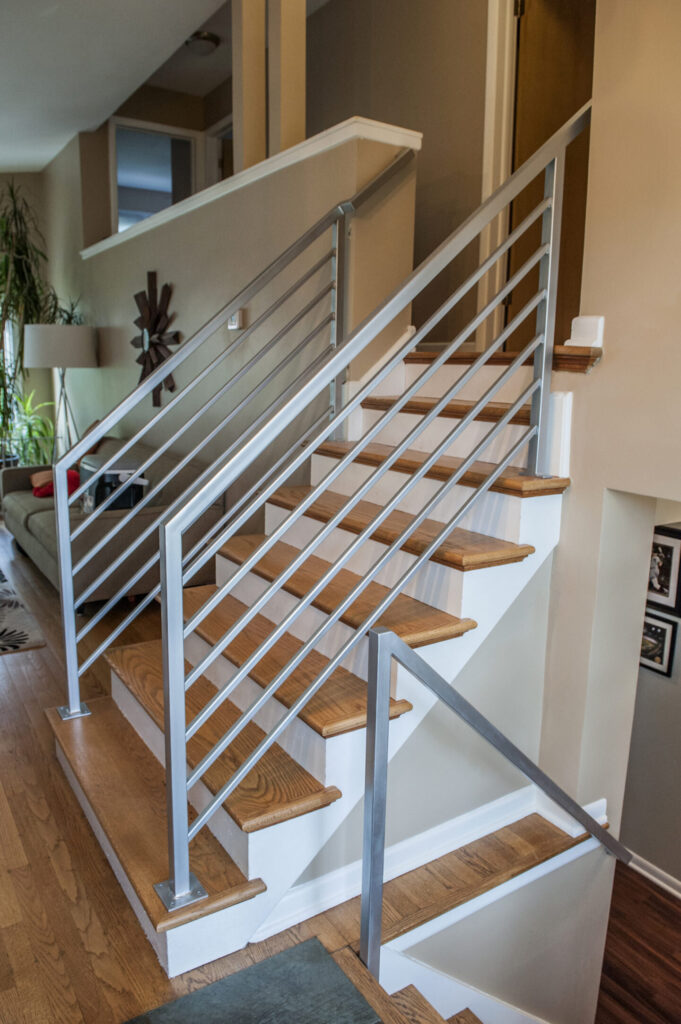
Request a Stainless Steel Railing Quote in South Florida
Send photos of the full railing area, rough measurements and close views of the mounting surface.
Include:
- The property type
- Interior or exterior use
- Preferred cable, glass or bar system
- Approximate linear footage
- Stair and landing photos
- Details about the existing railing
- The floor or balcony level
- Coastal or pool exposure
- HOA or building requirements
- Access restrictions
These details help identify the likely stainless grade, railing system and mounting method before a site visit.
Call 561-672-0717 or email info@modernrailingco.com.
Frequently Asked Questions
Is Horizontal Cable Railing Allowed in South Florida?
Yes, when the completed system meets the applicable opening, load and deflection requirements. Cable spacing, post spacing, tension and anchors must work together rather than being reviewed separately.
Is Cable or Glass Better for a Waterfront Balcony?
Cable keeps the balcony open to airflow, while glass can reduce some wind but places more wind pressure on the railing system. The better option depends on the elevation, exposure, view and supporting structure.
Which Stainless Steel Finish Is Easier to Maintain Near the Ocean?
A smooth finish is generally easier to rinse because it traps less salt and moisture. A brushed finish can still work, but the surface roughness, grain direction and treatment around welds matter more than the finish name alone.
Can Stainless Steel Touch Aluminum or Galvanized Steel?
Yes, but salty moisture between dissimilar metals can lead to galvanic corrosion. Some connections need compatible fasteners, isolation washers or another barrier between the materials.
Can Stainless Steel Railing Be Anchored Through Balcony Waterproofing?
Yes, but the penetration detail needs to be planned before drilling. The anchor layout, sealant, drainage and membrane repairs should be coordinated with the railing and waterproofing work.
Is Stainless Steel Railing Hurricane Resistant?
Stainless steel alone does not make a railing hurricane resistant. High-wind performance depends on the posts, infill, anchors, edge distances and supporting structure working as one approved system.
How Long Can Stainless Steel Railings Last in South Florida?
A properly selected, fabricated and maintained system can provide decades of service. Salt buildup, pool chemicals, rough surfaces, trapped water and untreated weld areas can shorten its useful life.
