
Call For estimate
Glass Railings
Black Aluminum Railings
Dark & Light Wood Railings
Aluminum Railings
Call (561)672-0717

Knee Wall Railings
Fascia Mount Railings
Indoor Stair & Surface Mount Railings
Outdoor Stair & Surface Mount Railings
Handrails
Standoff-Pins Glass Railing Systems
Glass Railing Post Systems

5 Signs Your Pool Fence May Not Pass a Broward County Inspection
If you are getting ready to sell, renewing a homeowners policy, or thinking about a curious toddler in the backyard, your pool barrier is probably on your mind. A fence that looked fine for years can quietly fall out of code, and most owners only find out after an inspector flags it. This pool fence inspection checklist for Florida homeowners covers the five problems that fail barriers most often around Broward County, so you can catch them before someone official does.
The encouraging part is that most failures trace back to a short list of repeatable issues. None of them are mysterious once you know what an inspector reaches for first.
Why Do Pool Fences Fail Florida Safety Inspections?
Pool fences usually fail Florida safety inspections because of a gate that no longer closes and latches on its own, a latch mounted too low, or hardware and posts worn down by years of coastal weather. Inspectors in Broward County work from Florida Building Code Chapter 515, and they test a barrier the way a small child might challenge it, not the way it looked on installation day.
Salt air and humidity accelerate the wear. Hinges stiffen, springs lose tension, and metal hardware corrodes faster a few miles from the water than it would inland. A solid barrier still drifts out of compliance over time, which is why the reasons a pool fence fails inspection in Florida repeat from one property to the next.
Sign 2: Is the Latch Release Mounted Above the 54-Inch Line?
Sign 1: Does the Gate Still Self-Close and Self-Latch on Its Own?
Sign 3: Are There Gaps Wider Than Two Inches Under the Fence?
The space beneath a pool fence cannot exceed two inches measured from the bottom rail to the surface below. Ground settling, deck heaving, and erosion around the base are the usual culprits, and the gap rarely appears evenly across the whole run.
This one catches owners off guard because the fence itself looks untouched. A barrier installed flush years ago can develop a four or five inch crawl space at one low corner after a few rainy seasons. Inspectors measure at the lowest point, not the average, so a single dip is enough to fail the check.
Sign 5: Are the Posts Loose or Is the Concrete Cracking at the Base?
A pool fence fails if anything within reach gives a child a foothold to climb over it, even if the fence meets every other standard. Inspectors look at the zone around the barrier, not the fence in isolation.
Pool equipment, planters, deck furniture, AC condensers, and low horizontal rails all turn a compliant fence into a ladder.
Horizontal members spaced closer than 45 inches apart are treated as climbable by design. Moving a planter or relocating a chair solves some of these on the spot, while a fence with built-in horizontal rails may need a different barrier altogether.

Walking the perimeter with this list gives you a clear read on where your barrier stands. If two or more items come back questionable, the fence is worth a closer look before an inspection date is on the calendar.
A Quick Pool Safety Barrier Compliance Check
What Happens If Your Pool Fence Fails a Municipal Inspection?
If your pool fence fails a municipal inspection, the city issues a code violation notice that gives you a set window, often around 30 days, to repair or replace the barrier before daily fines begin. Insurance inspections work differently, since a failed barrier can delay a policy renewal or raise your premium rather than trigger a fine.
For homeowners across Pompano Beach and the surrounding Broward communities, the practical takeaway is to treat a failing fence as a deadline, not a suggestion. Acting inside the cure period keeps the situation a maintenance task instead of a recurring penalty.
Should You Repair the Existing Barrier or Replace It?
The answer depends on which sign you are dealing with. Mechanical problems like a tired hinge, a worn latch, or a single sunken section are usually a fix, and bringing in help to repair or replace a worn pool barrier is faster and cheaper than a full teardown. Structural failures across multiple posts, or a fence with built-in climbability, point toward a new barrier instead.
If you are replacing the fence anyway, it is worth looking at how a code-compliant glass pool fence handles the same coastal conditions that wore down the old one, since the hardware and mounting are built for self-closing operation and salt exposure from the start.
Either option puts you back in compliance, and the right choice usually becomes obvious once you know which of the five signs you are actually facing.
A pool gate has to swing shut and latch by itself from any open position, with no push or pull from a person. This is the single most common failure point inspectors see, and it is almost always a hardware problem rather than a fence problem.
Self-closing hinges rely on internal spring tension that fades over time, especially in salty coastal air.
If your gate drifts halfway and stops, or closes but does not catch the latch, the barrier no longer counts as compliant. A pool gate self-closing hinge adjustment can often restore tension by turning the adjustment screw a quarter turn at a time, though corroded or stripped hinges usually need replacement instead of tweaking.
The latch release on a pool barrier gate must sit at least 54 inches above the ground so a young child cannot reach it.
Older fences and DIY installs frequently put the latch at a convenient adult height, which is an instant fail under current Florida code.
Height alone is not the whole test. The area within 18 inches below and to the sides of the release also has to stay free of openings a child could reach through. If your gate has a decorative gap right under the latch, an inspector may flag it even though the latch height technically measures correctly.


Sign 4: Has the Barrier Become Climbable From Nearby Objects?

Loose posts and crumbling concrete around the footings fail inspection because a barrier that flexes or wobbles cannot reliably keep a child out.
Structural issues like these tend to develop slowly, then show up all at once during a wind event or a hard lean test.
In South Florida, saltwater splash-out drives a lot of this damage. Chlorinated and salty water repeatedly wets the deck around the posts, and over time that moisture works into the concrete and causes spalling, the flaking and pitting you see around aging fence footings. Once the concrete loses its grip on the post anchor, the section needs re-setting or replacement before it will pass a Florida pool safety barrier compliance check.
Use this as a fast self-audit before any municipal or insurance inspection. It mirrors the points a Broward County inspector tends to test first.
We provide free estimates and service South Florida - Palm Beach County, Broward County and Miami-Dade County. All of our material is available & in stock making, turnaround time currently at 2-3 weeks (subject to change) for installations and for shipping orders within 5 business days in US & abroad.
Modern Railing Co has top quality material, industry experience, dedication to service, make us different than others. We will deliver your expectations!
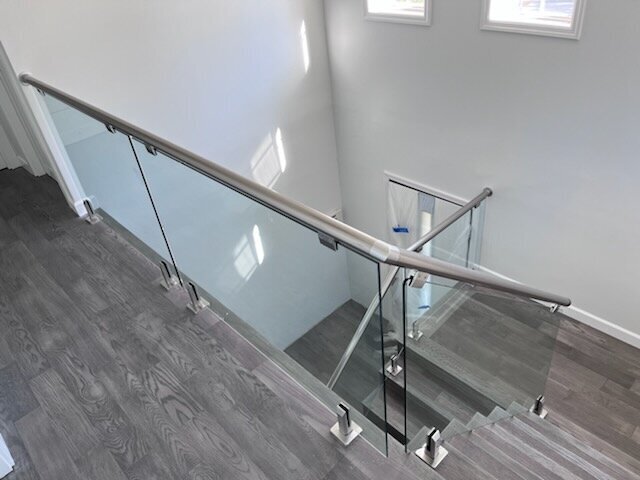
Modern Railing Co's aluminum railing & glass railing systems are available in various styles to complement residential and commercial settings. Main features include:
* Strong and durable construction (weatherproof)
*3/8 & 1/2 inch Tempered Glass
*9/16, 11/16 and 13/16 Laminated Tempered Glass
* Extremely long service life
* Unique finish (anodizing) which fulfills high quality standards (doesn't rust or corrode).
* High resistance to UV radiation (doesn't flake or crack)
* Flexible designs
* Easy maintenance
* All items are in stock
Request a Quote
South Florida GLass & Aluminum Railings
Check out our reviews on Google
About US
(561)672-0717
info@modernrailingco.com
980 North Federal Highway Suite 110
Boca Raton, FL 33432
Shipping Available in the US & Installation in South FLorida.
Contact Us